Twenty-two people are coming. You are looking at a photograph of a 20cm cake on a screen with no real idea whether that is enough, or embarrassing, or twice what anyone will eat.
We get asked this more than anything else, and it arrives as two questions wearing one coat. How many does this feed. And then, once it is on the table in front of everybody, how do you cut it so the last person served gets a proper piece and not an apology.
Start with the number, not the cake
Decide the shape of the table before you decide the size of the cake. For small groups the best answer is often not a cake at all.
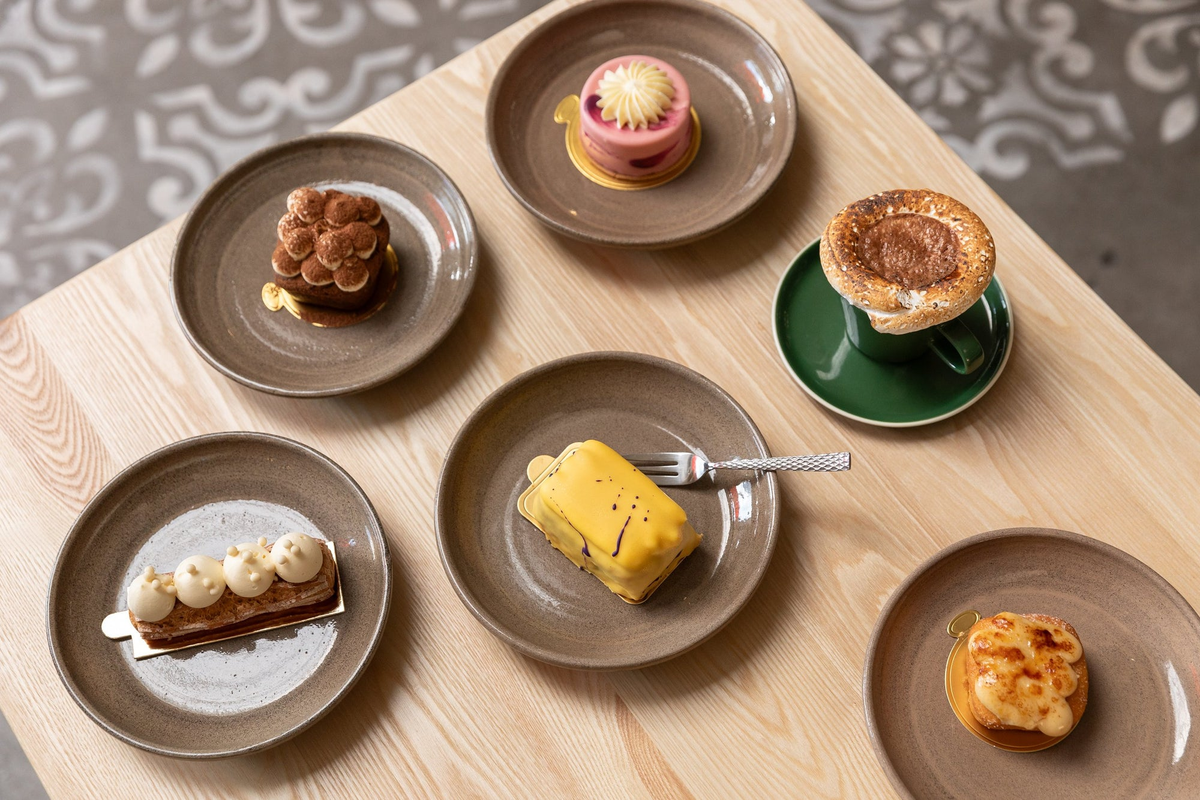
For two to six people, mini cakes are one serving each and everybody gets their own flavour. Nothing needs cutting. Nothing gets left. From seven to fifteen, a layer cake earns the centre of the table, with mini desserts filling the gaps beside it. Past sixteen, step up a size instead of buying two cakes, and put a spread of miniatures around it so anyone who only wants a mouthful can take one. Our Christchurch cakes page lays the whole range out this way, from single desserts to trays and layer cakes for a crowd.
What each size actually feeds
These are the numbers our kitchen works to, not estimates.
- Mini cakes and mini desserts: 1 serving each, sold individually or in trays of six and twelve.
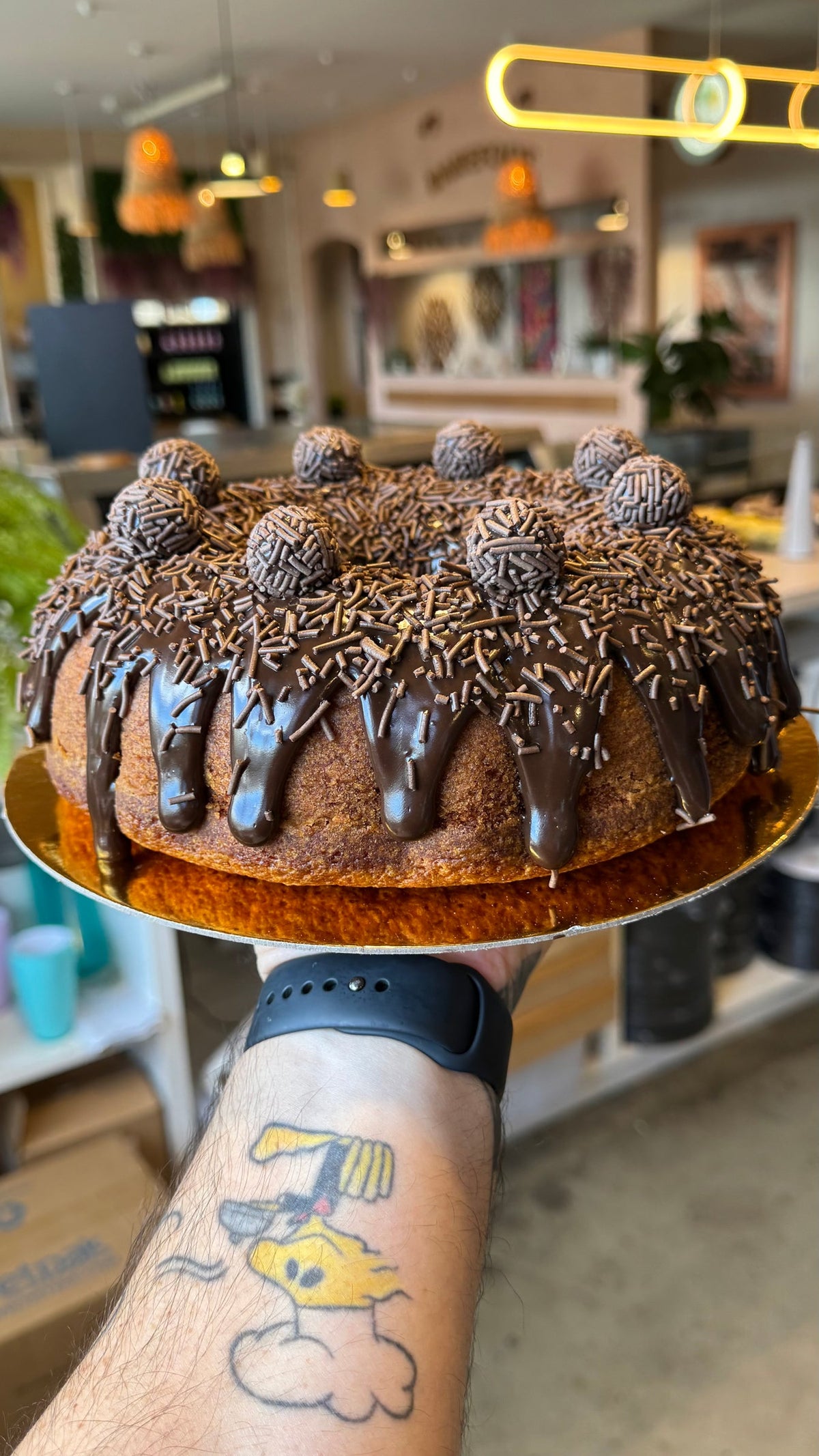
- 20cm loaf: 8. 25cm bundt: 16.
- 20cm dessert or tart: 10 to 12. 1kg dessert box: 4.
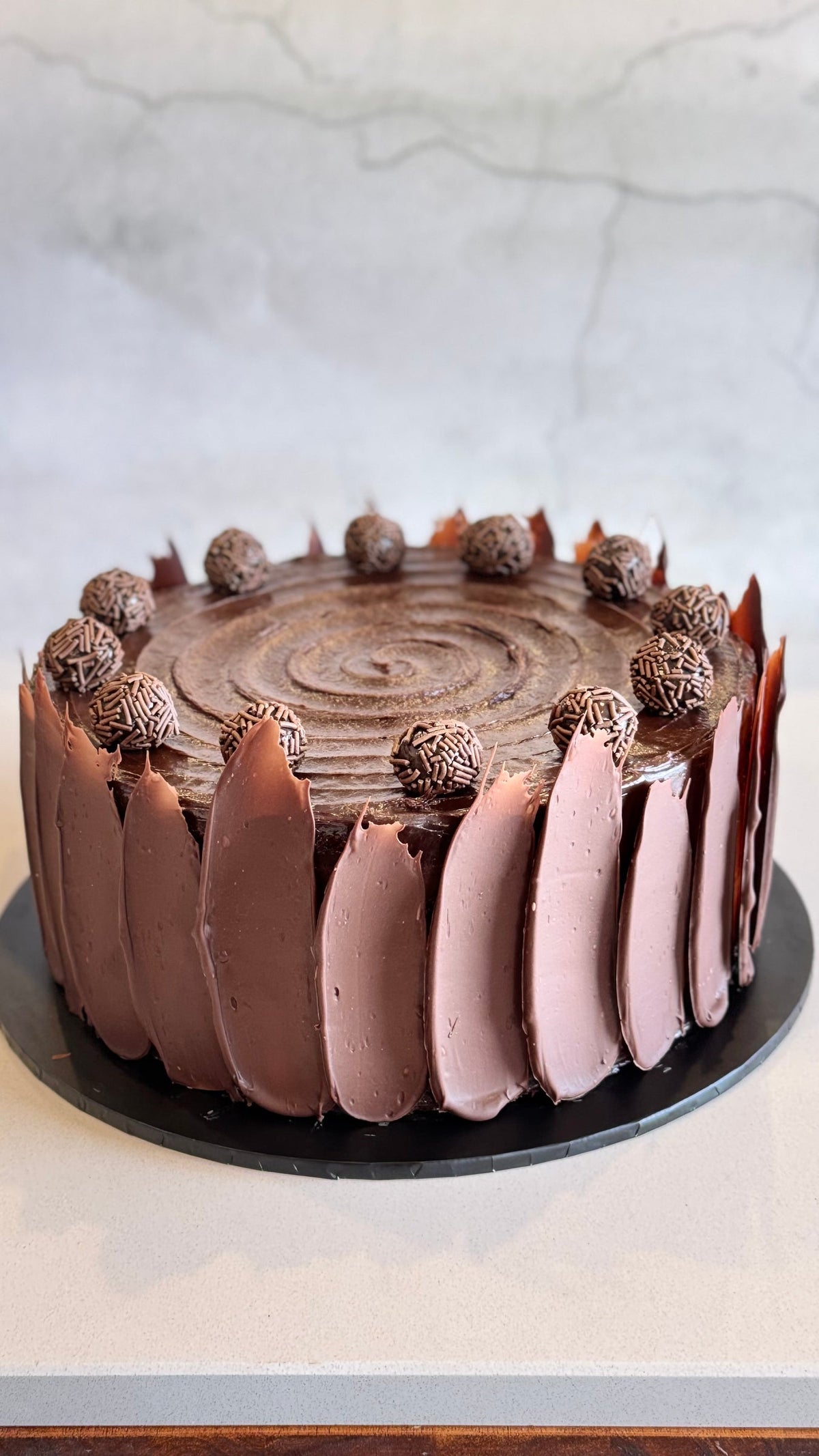
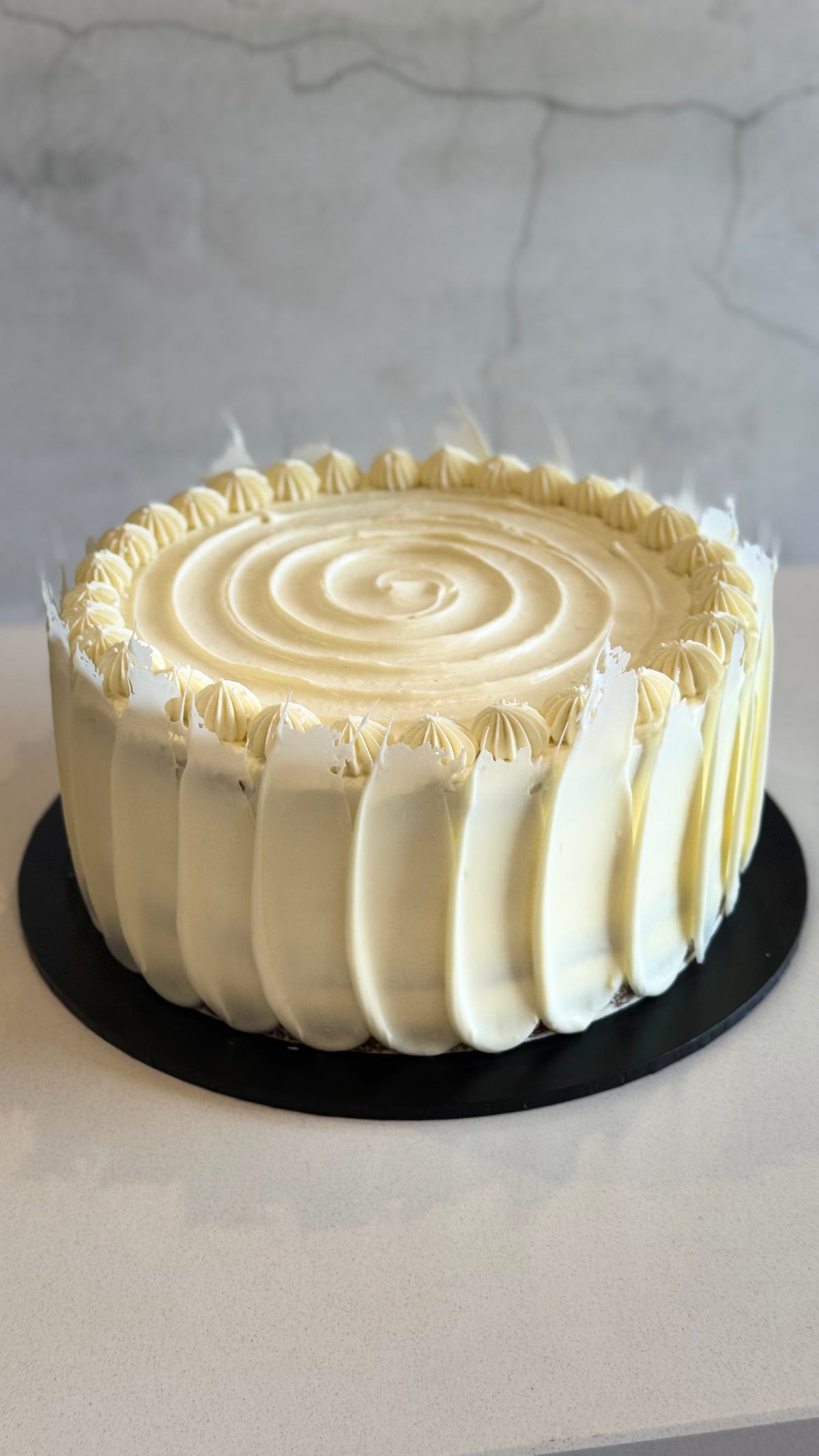
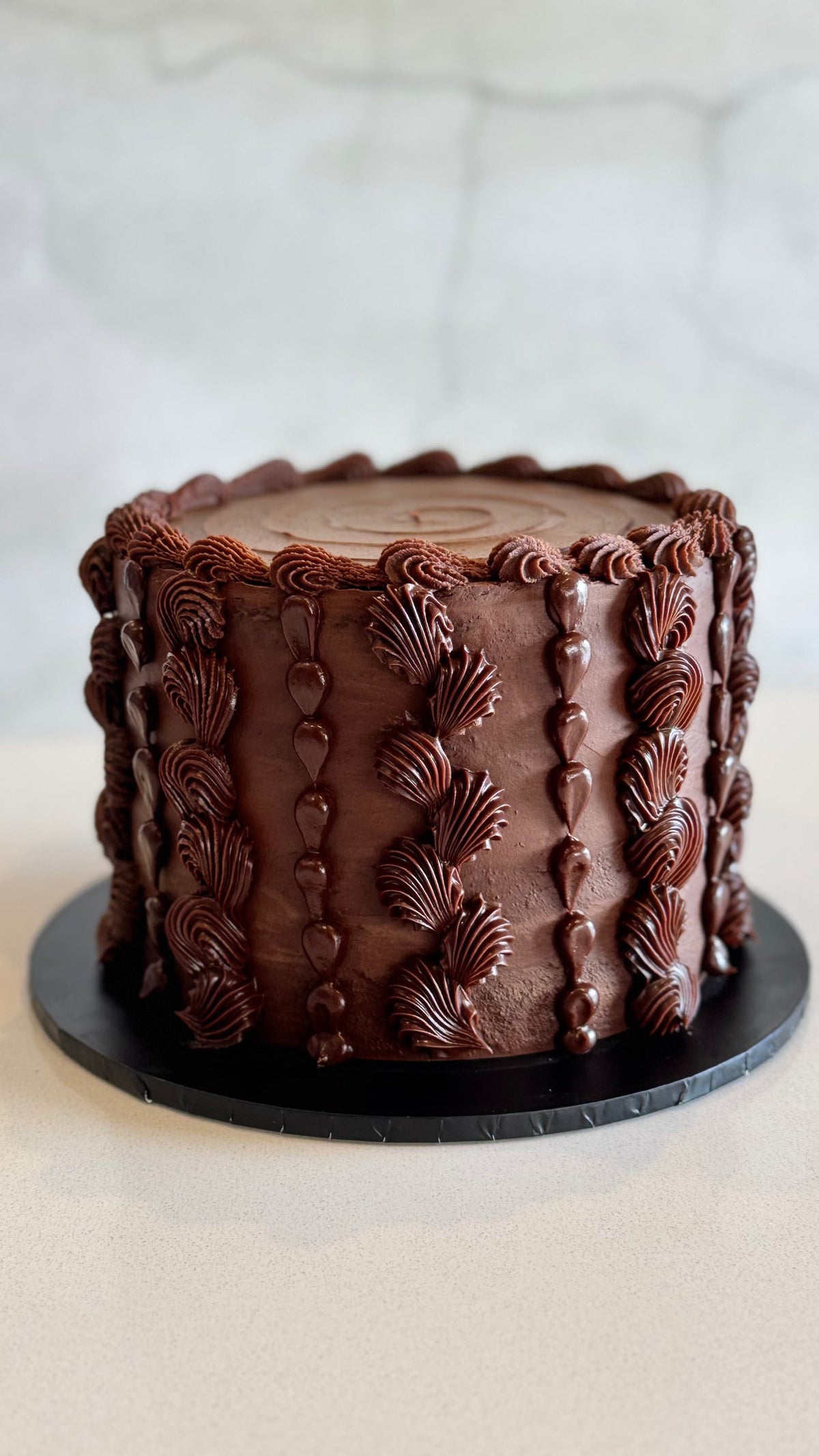
- Layer cakes: 15cm serves 12 to 15, 20cm serves 20 to 25, 25cm serves 30 to 35.
- Petit fours: count 3 to 5 per guest.
One correction to make before you use them. Our cakes cut bigger than they look, and if there is any other dessert on the table, a plate of biscuits, fruit, anything at all, the honest move is down a size and not up. A cake finished to the board beats a cake half of which goes home in foil.
Torn between two flavours as well as two sizes? Buy a slice of each in store first. Bring the person you are planning with. Two forks, two plates, ten minutes at a table with the kitchen going behind you, and the argument settles itself in one visit instead of three. Our guide to birthday cakes in Christchurch goes further into which flavour suits which room.
Set yourself up before the first cut
Most bad slices are decided before the knife goes in. Take the cake out of the fridge and give it an hour or two on the bench. Cold buttercream tears and pulls the crumb with it; buttercream at room temperature parts under the blade and closes behind it.
Then three things beside the board. A long serrated knife, which saws through layers without compressing them. A jug of very hot water, and that matters more than the knife does. A cake server or a small palette knife to lift each piece off cleanly. Dip the blade, dry it, cut, repeat. Skip the dipping and you get ganache dragged in a dark smear down the side of every slice after the first.
Two ways to cut a round cake
Concentric circles. Score a circle in the centre, about a third of the diameter. Cut the outer ring into even fingers, then divide the inner circle the same way. Thirty-five servings come out of a 25cm like this, with nobody handed a wedge the size of a doorstop, and every piece keeps its full height, which is the whole point of a layered cake.
Rows. Cut the cake into parallel strips, then cut across each strip. Faster, one person can do it standing up, and it suits square trays and sheet-shaped desserts. You get neat rectangles instead of wedges. Children prefer them, and so do plates.
Either way, cut all the way down to the board in one motion. Sawing back and forth drags crumb up through the filling. Wipe the blade before it goes back in.
Between our counter and your table
Your cake is handed over already assembled in a box, and it keeps overnight in a fridge in our own packaging with no change to taste or texture. Worth knowing on a Friday night, because collecting the day before a party is the calm version of the morning-of scramble.
Storing and transporting have their own guides, so no repeating them here. Read how to store a cake properly before it goes in the fridge, and how to transport a cake before it goes in a car.
Ordering, and the dates you can actually pick
We bake a set range and do not take briefs: no off-menu cakes, no fondant, no custom colourings, no bespoke decoration. Most things need two days' notice, larger desserts need three including the Romeo & Juliet cheesecake, and petit fours need seven. The date picker at checkout only shows dates the kitchen can meet for what is in your cart, so trust it instead of guessing, and start browsing from the birthday cake range.
Retail is pickup only. We do not deliver or courier, because cakes are far too easily damaged in transit, and that is also why yours leaves boxed and steady. Collect from our patisserie inside The Welder on Welles Street at the pickup time you chose at checkout. Closed Sunday and Monday, so a Sunday birthday means collecting on the Saturday and cutting it a day later. Our guide to ordering and our FAQ cover the rest.