Meringue is two ingredients. Egg white and sugar, roughly twice as much sugar as white by weight. Everything separating a shell that shatters from a cloud that holds its peak for hours comes down to one question: when the sugar meets the white, and how hot it is when it does. Three professional answers exist. A pastry kitchen keeps all three.
One ingredient, three methods
- French. Raw whites are whipped and caster sugar rained in as they climb. Fastest of the three and the least stable, so it goes straight into the oven. This is the method behind a baked shell that shatters on the outside and stays marshmallowy in the middle.
- Swiss. Whites and sugar warm together over a pan of water until the grains dissolve and the mixture stops feeling gritty between finger and thumb, then whip off the heat. Denser, silkier, far more stable than French.
- Italian. Sugar is cooked to a syrup at around 118 degrees and poured in a thin thread into whites already whipping, so the syrup cooks the white as it goes. The most stable of the three. It will sit on a dessert for a day without weeping.
Why a pastry chef picks one over another
Stability is the whole argument. Meringue heading straight into an oven does not have to survive on its own, so French is the sensible choice and its lightness counts as an advantage. Meringue going onto a finished dessert gets carried, chilled and cut hours later. That one has to hold its shape and its moisture, so Swiss and Italian earn their extra steps. Texture follows the same logic. The more sugar dissolved before whipping, the tighter and glossier the result.
Where to taste the difference
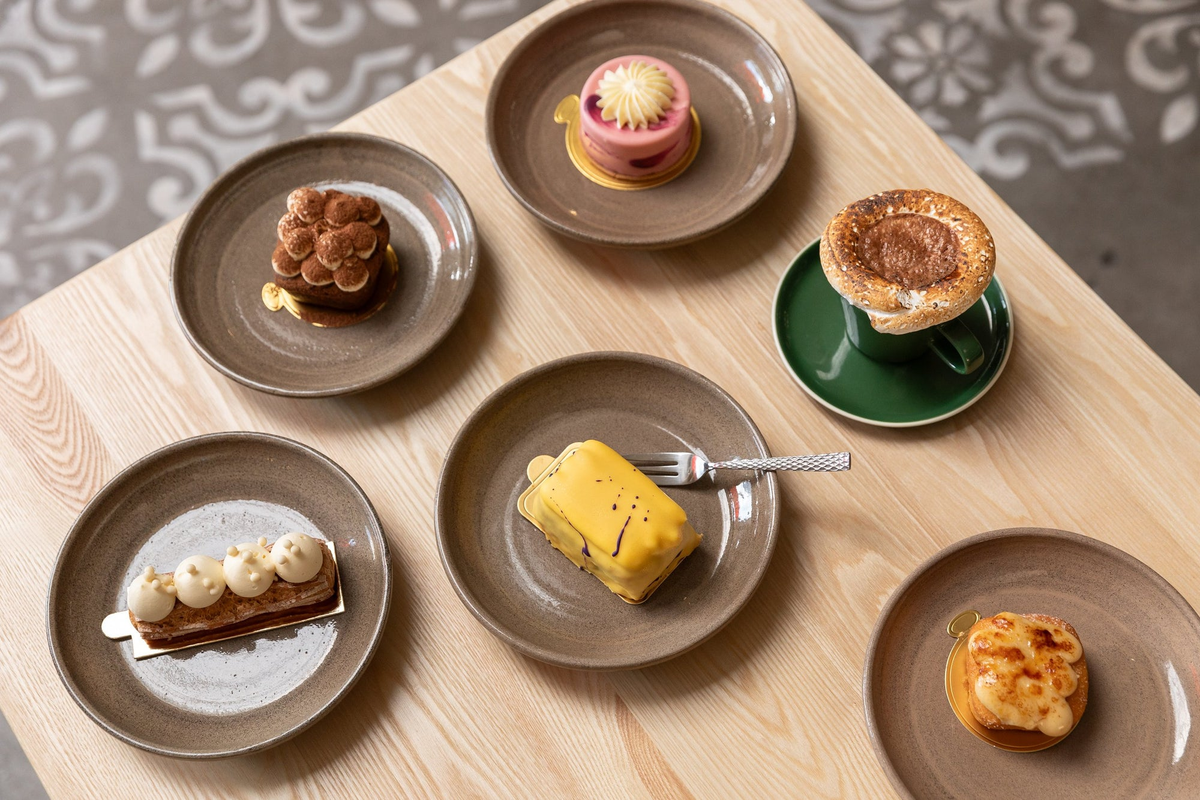
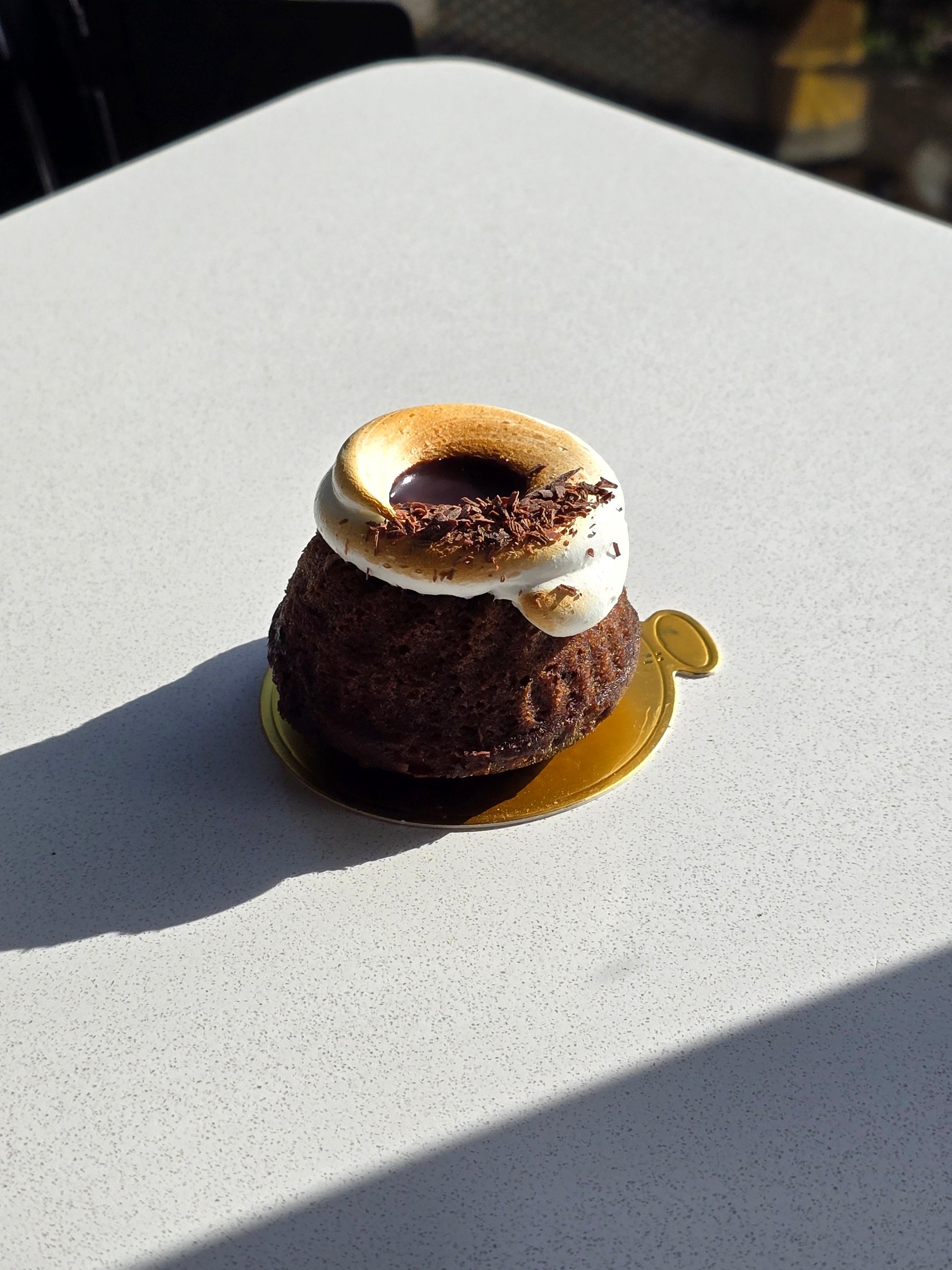
The Lemon Tart Mini is the clearest example in the cabinet: a shortcrust base made with no added gluten, a light lemon mousse, and a crown of toasted meringue that has to stand up to the acidity underneath without collapsing into it. Push a spoon straight down through all three and the order is scorch, then cold sharp lemon, then the snap of the base. The Hot Chocolate Mini Cake uses toasted meringue over spiced chocolate sponge and ganache for a different job entirely: sweetness against depth instead of against sharpness. On the Lemon Blueberry Cake, meringue turns up as dry batons scattered over tres leches ganache, there for the snap and gone in a second. The passionfruit pavlova in the petit four range is a hand-piped shell, crisp outside and soft inside, filled with passionfruit curd. Four uses, four textures, one pair of ingredients. The rest of the mini desserts range shows how often it turns up.
Toasting, and what it does to the flavour
A blowtorch does more than colour the top. It caramelises the sugar at the surface only, laying a thin bitter edge against the plain sweetness underneath and firming the outside just enough to keep the ridges standing. Go too far and you taste scorch instead of caramel. Stop early and you have added colour and nothing else. The line between the two is about two seconds wide. Hard to learn from a book.
Learning it with your hands, and who to bring
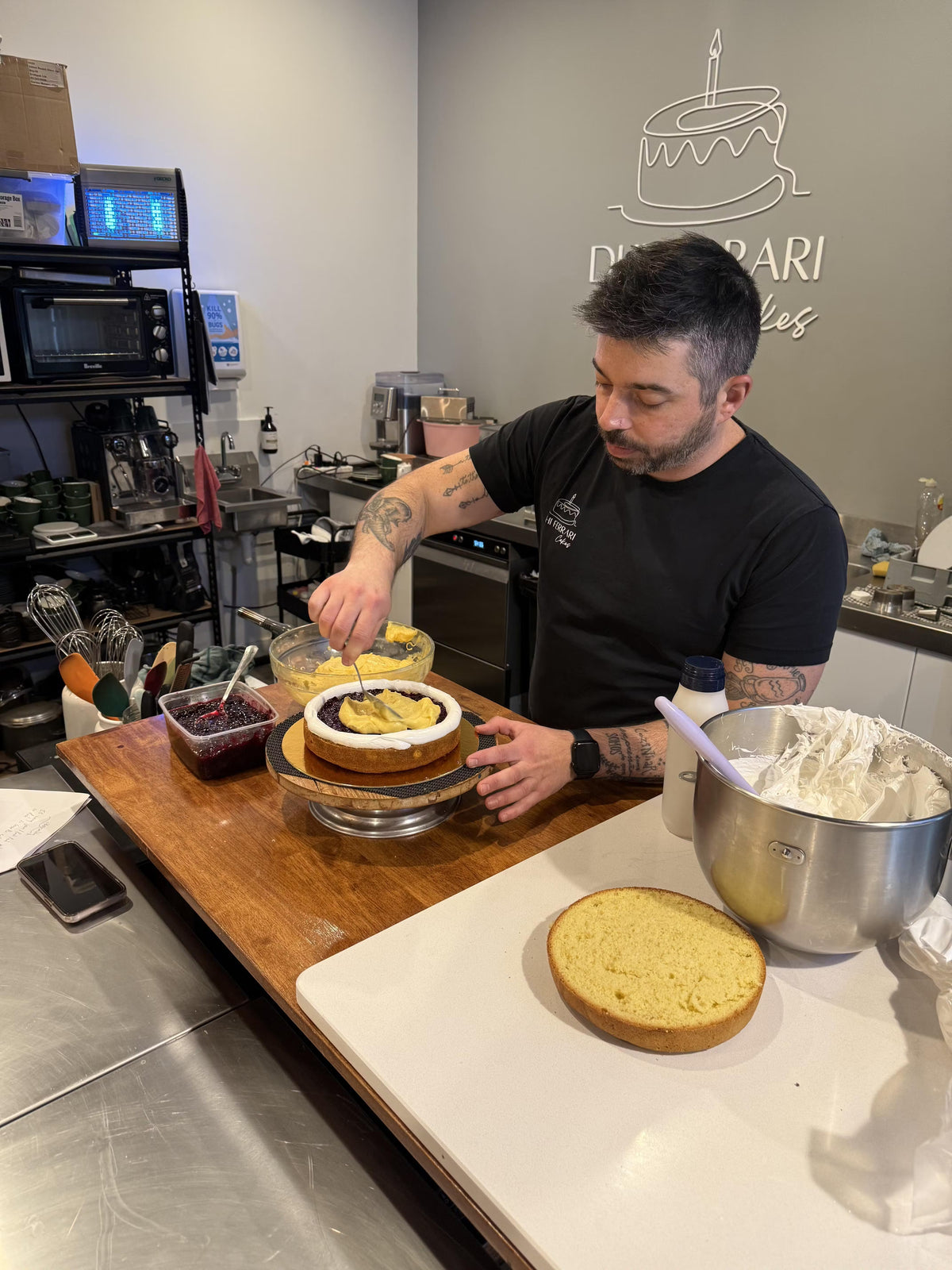
Dhi trained at French and Italian culinary schools, has more than eighteen years in patisserie, taught at La Salle University and ran his own culinary school for eight years. The story behind the patisserie explains how that ended up in Christchurch. Our public classes are capped at four people, and four is the number that matters here. Book two of the four places and you and whoever comes with you are half the room, close enough to the bench to watch the syrup fall in a thread and to ask why the bowl still feels grainy. Classes run from $130 to $180 a head, taking in the choux pastry class and the chocolate class with tempering. The class page lists the decorating levels.
Before you come in
Most things need two days' notice, and a petit four tray needs seven. A tray holds fifteen pieces, all made with no added gluten, as is the base of the Lemon Tart Mini. Our kitchen is small and without exclusive production areas for all of our different recipes, so traces may occur, and nothing is guaranteed safe for severe coeliac disease. The No Added Gluten Cakes & Desserts collection lists the rest. Collection is from our patisserie inside The Welder on Welles Street in the central city, and we do not deliver or courier anything. Doors open 10am to 9pm Tuesday to Saturday, and the frequently asked questions page covers everything else.