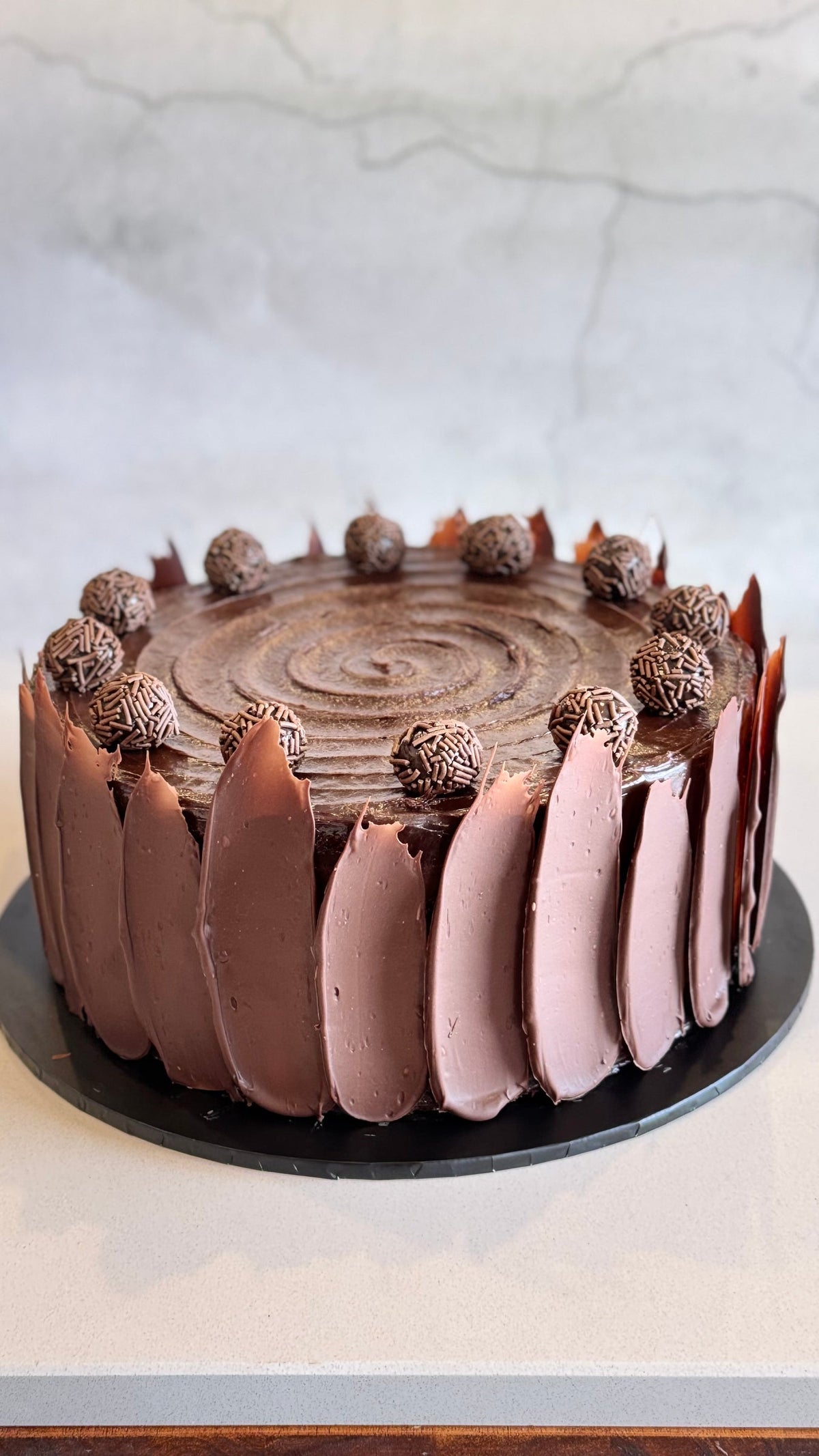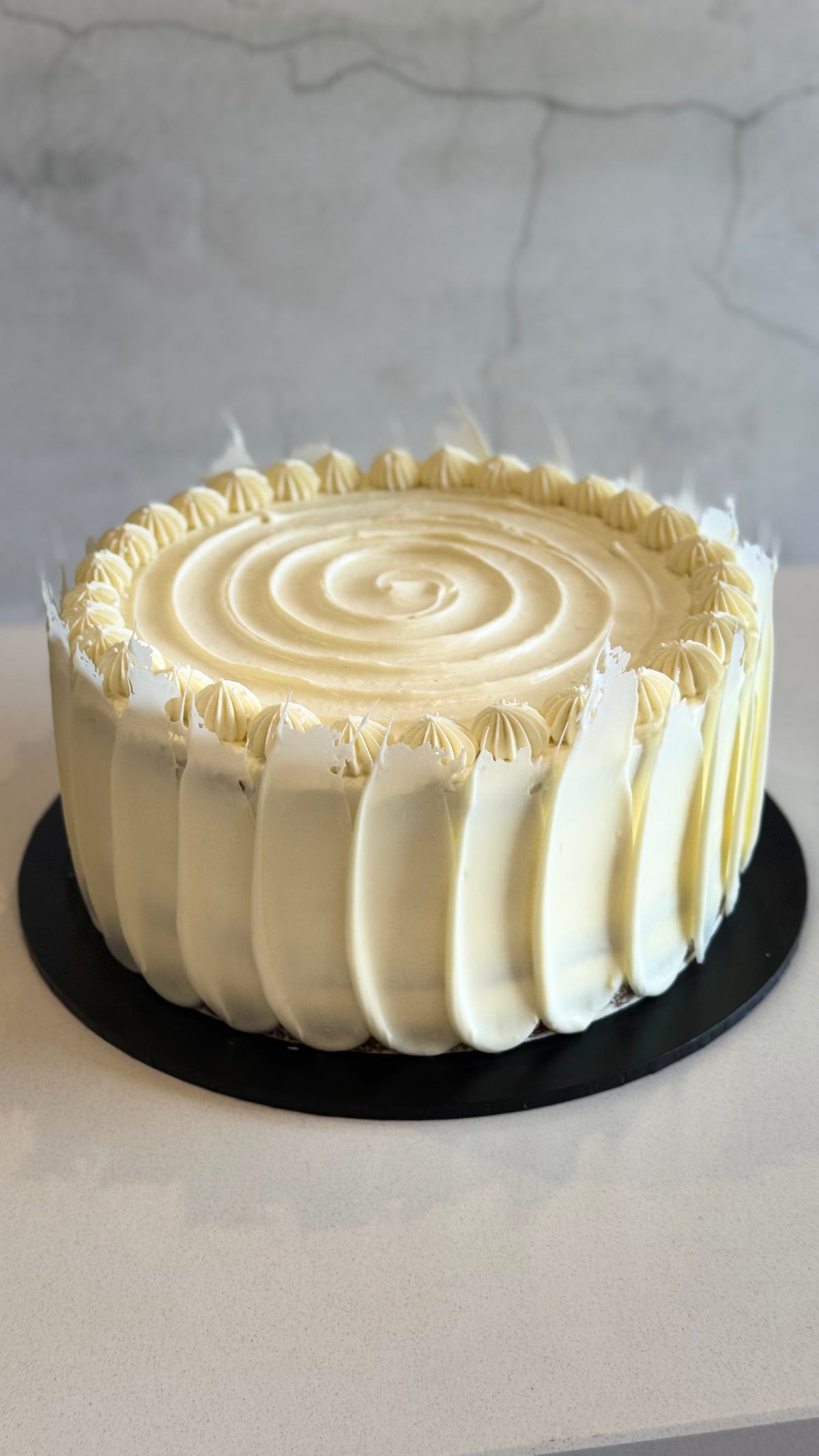
Collect a cake on Friday afternoon for a Saturday lunch and it spends about twenty hours in your care. Almost everything that can go wrong in that window is avoidable, and none of it is the cake's fault. A warm car. A sunny bench. A fridge with last night's curry in it. A knife nobody wiped between slices.
Collecting the day before is the plan, not the fallback
Cakes leave here already assembled in a box, top cut open if the cake is tiered, so nothing is left for you to build. Collecting the day before is deliberate. A cake keeps in a fridge in our packaging overnight with no change to taste or texture, and it lifts the collection off the morning when you have forty other things to do. Collection is the only option here, so putting the pickup on the day before is the single easiest thing you can do to make an event calm. The ordering guide covers how the date and time selection works.
Getting it home, with a second pair of hands
Carry the box from underneath, both palms flat, never by the sides. Keep the car cool. A footwell or a flat seat is steadier than the boot, where a box slides on the first corner and the cake goes with it.
Collecting a large cake alone is a two-handed job done with one hand, so bring someone. One of you carries, the other opens doors and drives, and the box never balances on a knee at a red light. It also turns an errand into twenty minutes at a table with a coffee, and a car park is a poor way to spend the day before an event. Collecting a tiered cake for a wedding? Our wedding cakes page covers it, and there is more on choosing and serving in this birthday cake guide.
Fridge or bench
Depends what you bought. The rule is short.
- Layer cakes from the specialty range, the Tres Leches among them, go in the fridge overnight, in the box. In heat they stay there until an hour or two before serving.
- Travel cakes from the tea cakes and loaves range need no refrigeration at all. Room temperature, away from sun and heat, still boxed.
- Larger desserts such as the Black & White Chocolate Mousse and the Romeo & Juliet cheesecake want the fridge, and both need three days' notice when you order, not two.
Keep the box shut either way. The packaging holds the shape and keeps the cake away from whatever else is in the fridge, because ganache picks up onion faster than you would believe.
The hour before you serve
Bring a refrigerated cake out one to two hours before it goes on the table. Straight from the fridge, a ganache sets stiff and a soaked sponge tastes muted and slightly waxy. Both come back as it warms. That hour is the difference between a good cake and the cake you actually ordered.
Then cut properly. Dip the knife in hot water and dry it between every slice, so each face comes away clean instead of dragging crumb through the filling. Portion by the numbers, never by eye. A 15cm layer cake gives twelve to fifteen. A 20cm gives twenty to twenty-five. A 25cm gives thirty to thirty-five. A 20cm loaf gives eight, a 25cm bundt sixteen. Eyeballing it is how the far end of the table ends up with the thin slivers.
What is not a take-home format
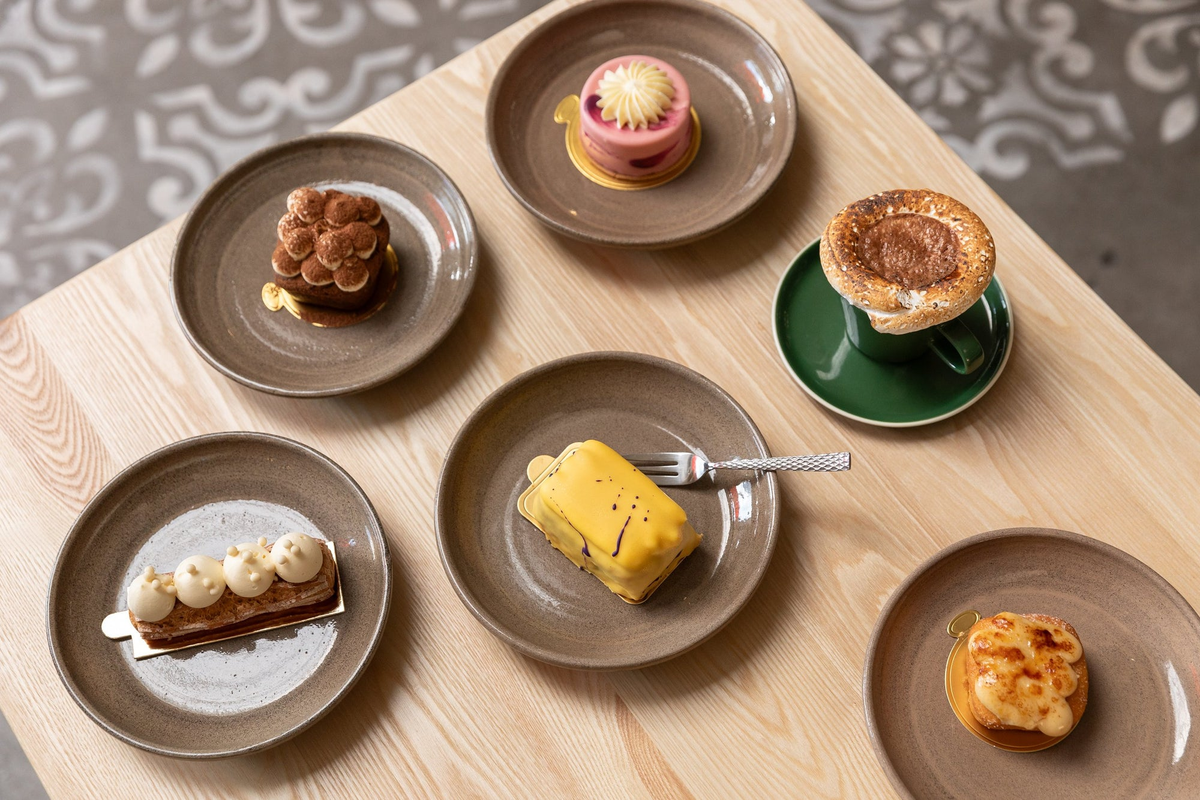
Some of the menu is built to be eaten where it is made. Everything on the made to order dessert menu is plated at the counter with ice cream and sauce and takes about ten minutes. The Matilda Chocolate arrives with hot chocolate sauce poured over it and cold ice cream already starting to slump at the edge. That belongs to a visit, not a fridge. The mini desserts are one serving each and need no notice, so they are what you buy on the day. Petit four trays are $60 for fifteen pieces and need seven days' notice, so plan those first, not last.
Before you click the date
Most of the range needs two days' notice, the larger desserts three, petit fours seven. The checkout date picker only offers dates the kitchen can meet for what is in your cart. Pickup is from our patisserie inside The Welder on Welles Street in the central city, and pickup is the only option. Open 10am to 9pm Tuesday to Saturday. The frequently asked questions page has the full storage and transport advice, alongside the menu.