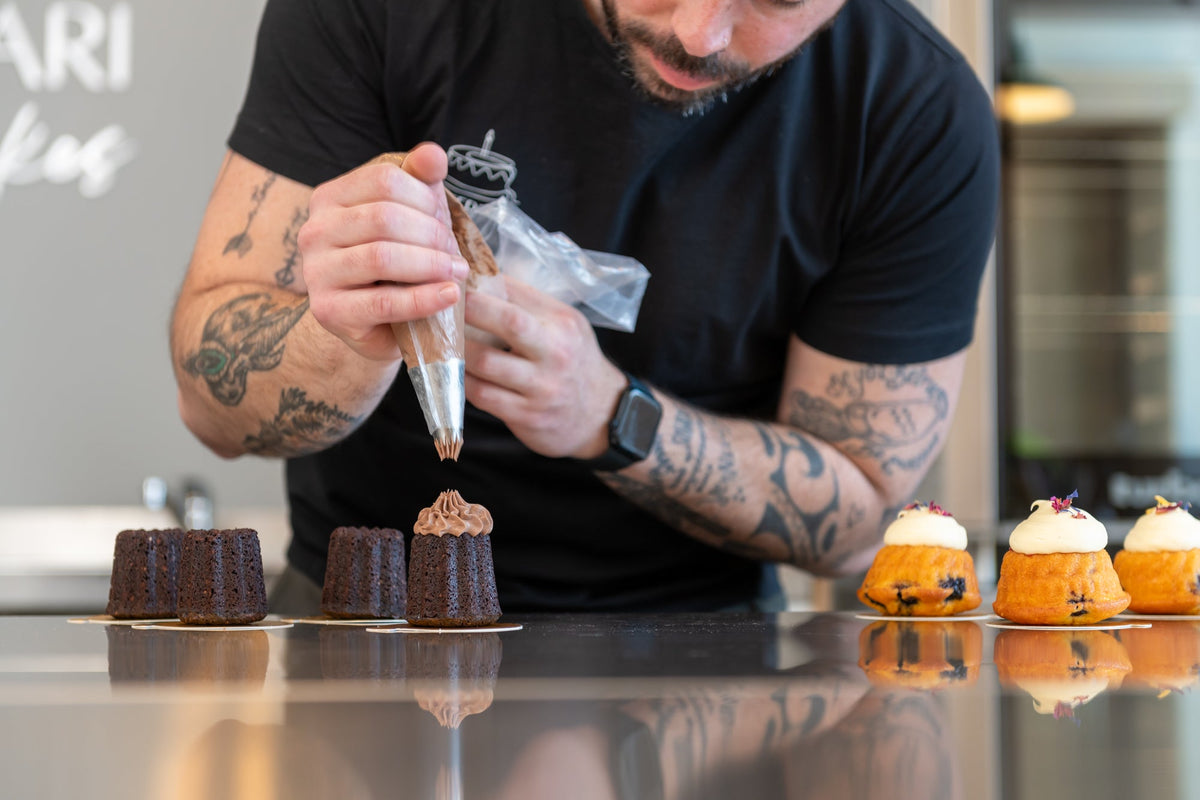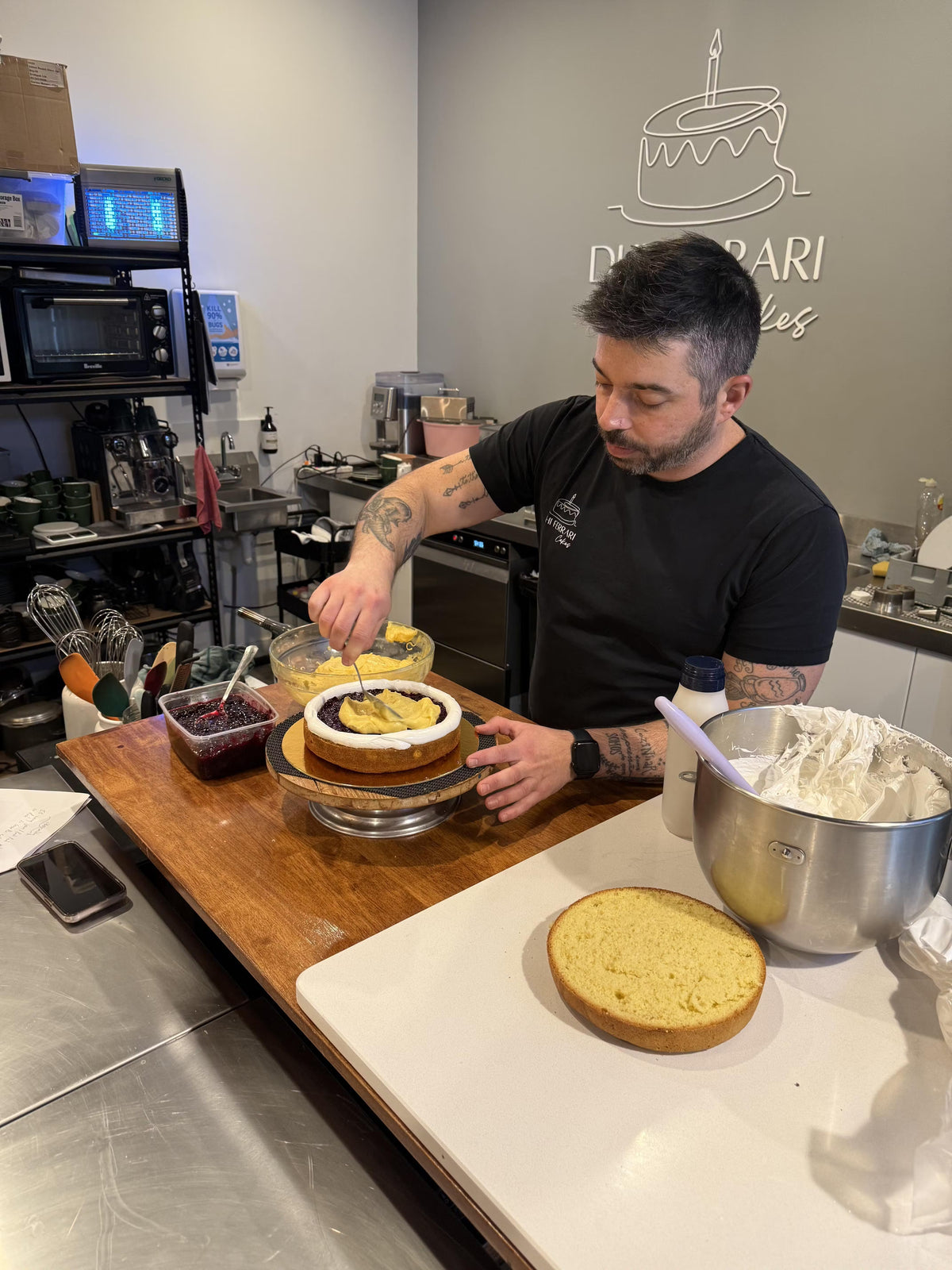
Watch the marble bench for five minutes and the same thirty seconds repeats. Melted chocolate goes down. Someone pushes it, folds it, scrapes it back into a heap, reads a thermometer, starts again. Tempering. Nobody is performing for the room; it is the only way chocolate sets hard and glossy and breaks with a snap, instead of setting soft and streaked with dull grey, and the kitchen at our patisserie inside The Welder opens straight onto the floor, so there is nowhere to do it quietly.
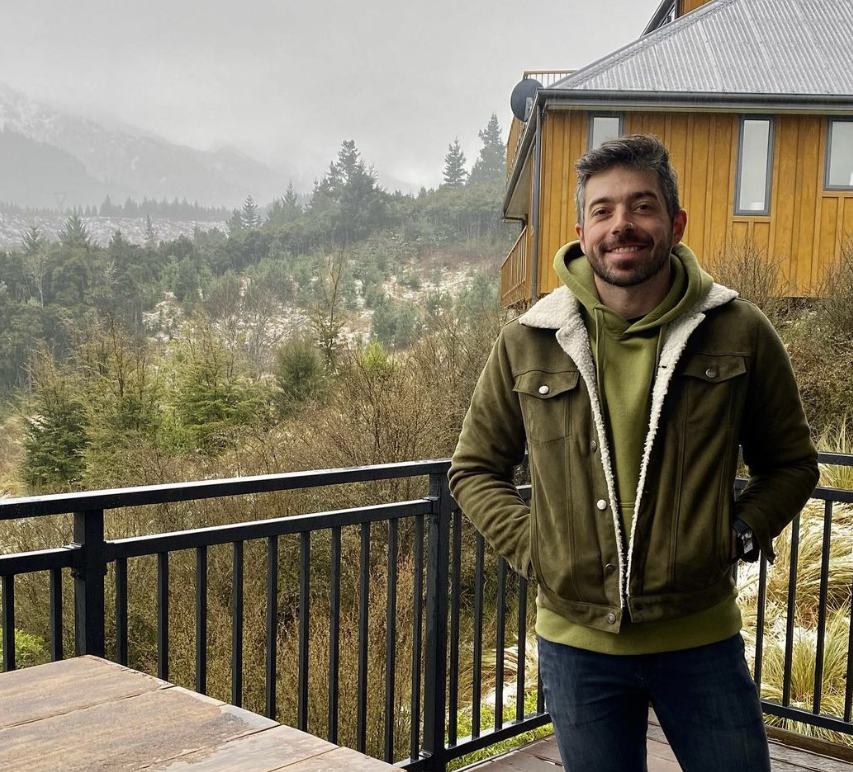
The chef doing it is Dhi Ferrari. He is from Rio de Janeiro. Over eighteen years in patisserie, trained formally at French and Italian culinary schools. None of that is the interesting part.
Eight years of students catching him out
He taught. Everything worth knowing about him starts there. He lectured at La Salle University, owned a culinary school in Rio for eight years, and ran his own cake shop for three. He won a Brazilian pastry competition. Rio recognised him among its top three pastry chefs and counted his shop among the top four in the city.
Awards fade. Eight years of teaching does not. You cannot explain a method badly for eight years, because the students catch you out. They follow the instruction exactly, it fails, and they come back and ask why. Do that for long enough and you stop knowing how a step works. You start knowing why it exists at all. A different kind of knowledge, and it turns up in the cabinet, not on a wall.
How a visit turned into a country
He came to New Zealand to see relatives. Then the COVID lockdowns closed the borders and he stayed through them. No hunt for a bigger kitchen, nothing to escape from. A visit became a country. Then other people's kitchens: desserts made for Sweet Soul Patisserie and for Le Panier, then a run as head chocolatier for She Universe Chocolates. Then a bench on Welles Street, and eventually a patisserie sitting at 4.9 out of 5 across 465 reviews. The about page fills in the rest of it.
What the training actually looks like
Classical training is not a vocabulary of adjectives. Strip it back and you find a long apprenticeship in a handful of unforgiving techniques, every one of them visible in the cabinet once you know where to look.
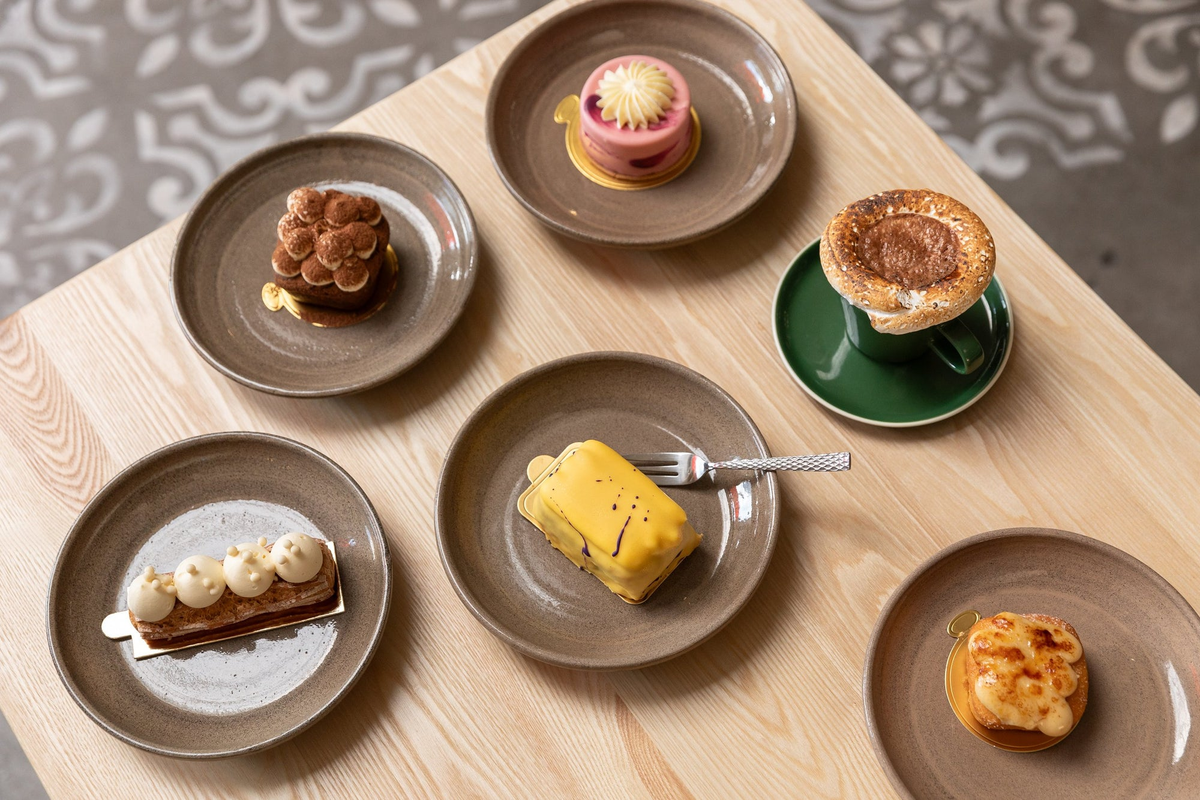
Meringue is three recipes, not one. French for anything going straight into an oven. Swiss or Italian when it has to sit on a finished dessert overnight without weeping into it or going tacky. Ganache is cooked, rested and sometimes whipped, and ganache montée behaves like a mousse while still tasting of chocolate, so a filling dissolves on the tongue instead of coating it. Chocolate is a temperature problem before it is a flavour one, and that is where the snap and the shine come from, and why the finishes here are ganache and chocolate work instead of fondant. Cut a four-layer specialty layer cake and the stripes come up clean, because every component was built separately and only then assembled.
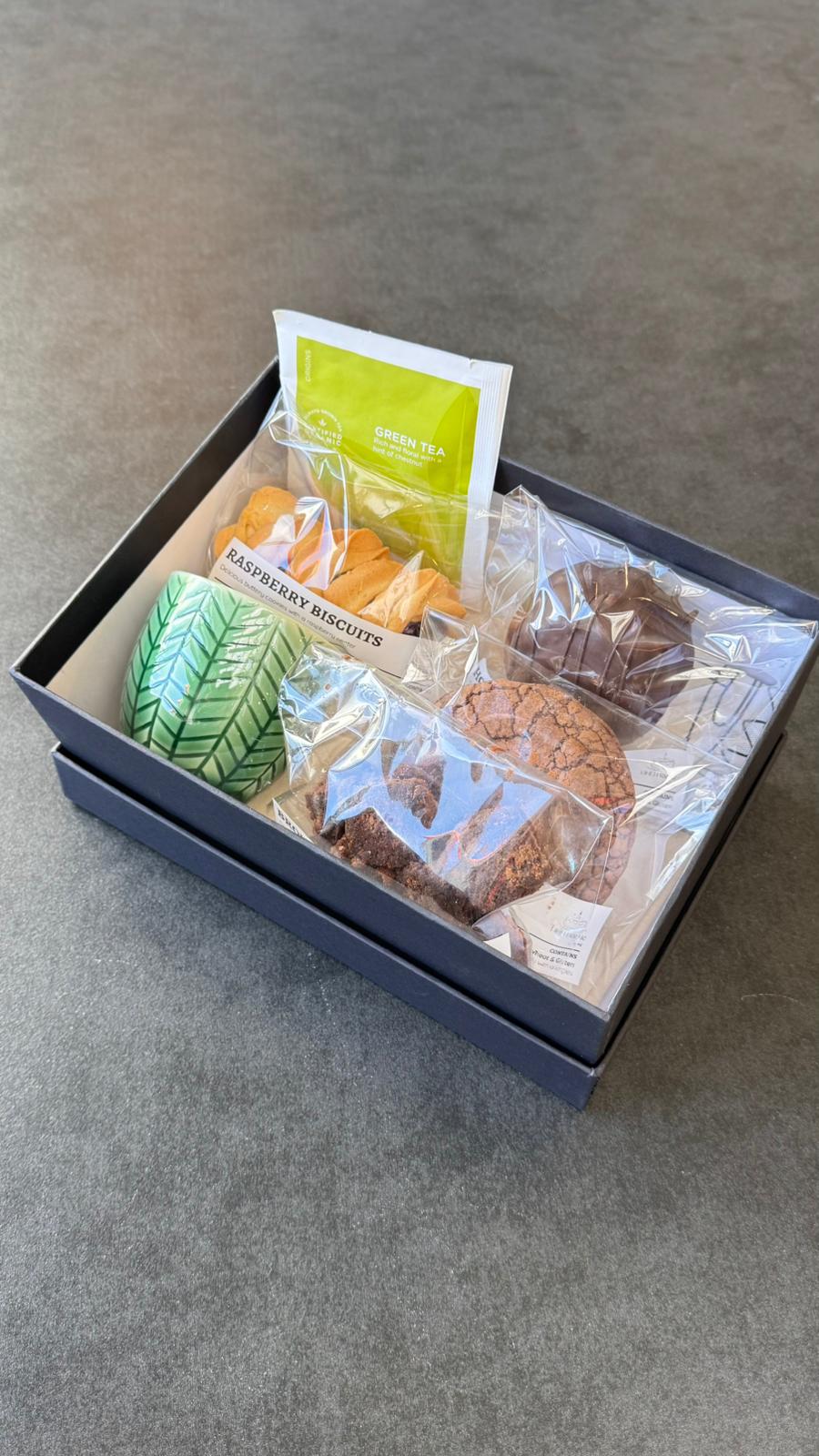
The other half of the training is refusal. Nothing starts from a bag, because a pre-mix has already chosen your sweetness for you. That pushes every decision back onto the supplier list. So the chocolate is Barry Callebaut, the vanilla is Heilala and not essence, the coffee is fair trade organic from Christchurch's own C4 Coffee Co., and the tea is Zealong in the Waikato, the only tea plantation in the country. All of them are named on the premium suppliers page.
Fusion, meant literally
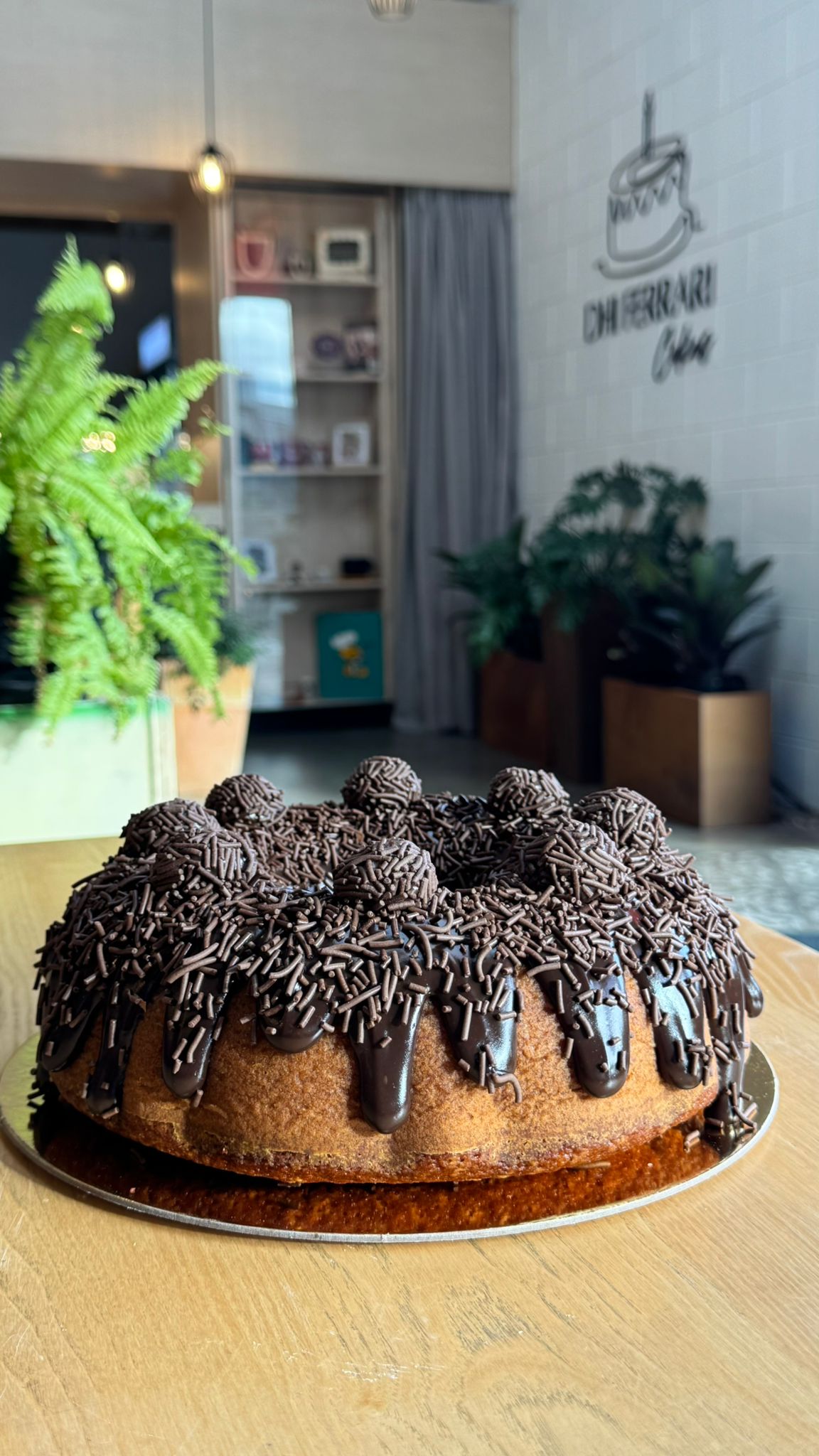
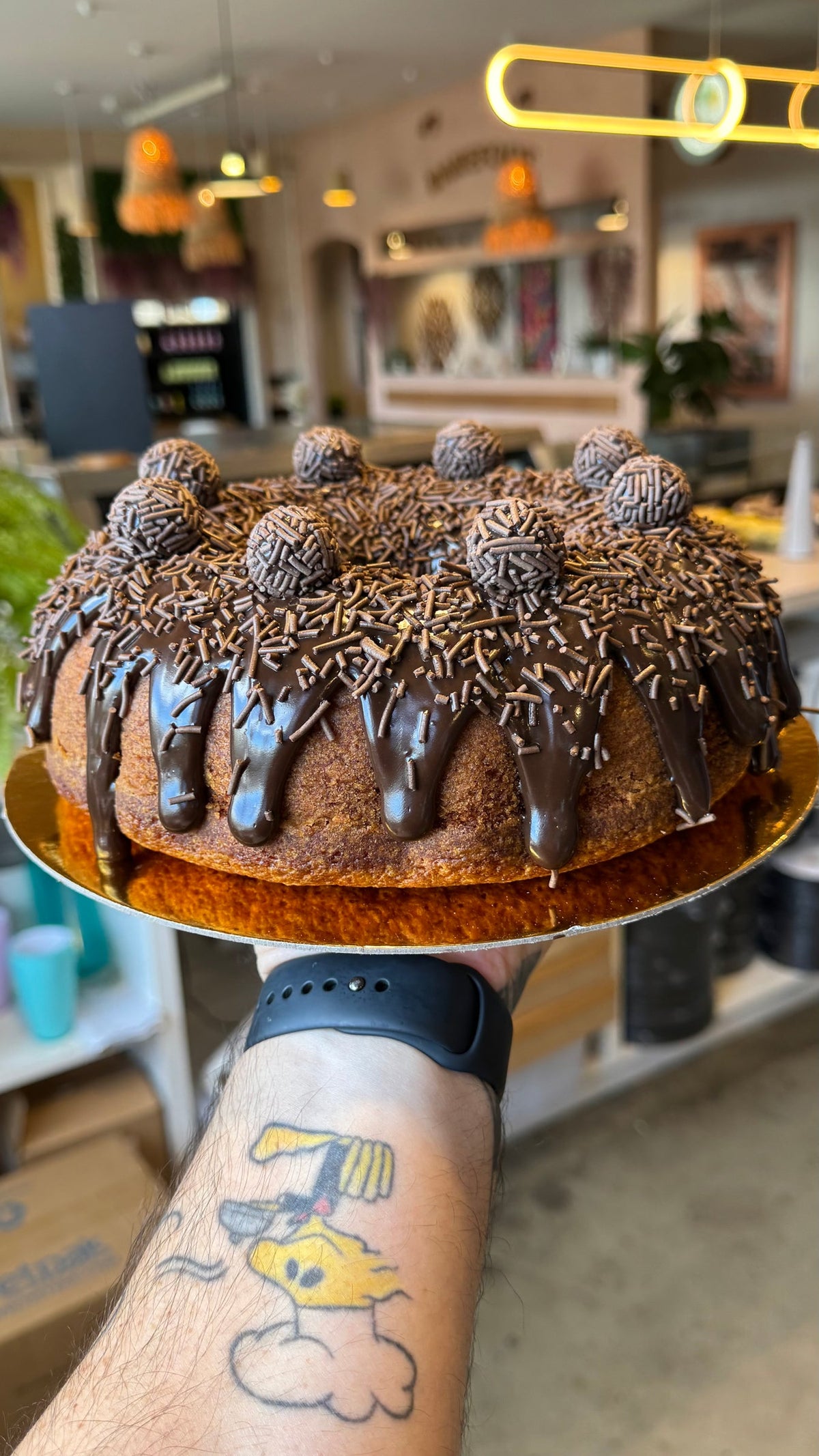
Fusion is usually a word that means nothing. Here it names a method: French and Italian technique carrying Brazilian flavour, with neither one used as decoration. The Thunder reaches for brigadeiro where a French cake would reach for buttercream. Sit at one of the movable tables on a Saturday morning and put a fork through a slice of it. The fork goes in slowly, the way it does through fudge, and comes out smeared. The crumb underneath is damp and heavy. The Romeo & Juliet cheesecake takes a Brazilian bar snack, salty cheese against sweet guava, and rebuilds it as patisserie. Underneath all of it sit five sentences he uses himself: no pre-mixed ingredients; select for taste, not cost; chase flavour instead of sweetness; do the expected at a level nobody expects; and send you out with something to tell your friends about.
Where the teaching went
The lecturing did not stop when the school did. Public cake decorating and baking classes run at that same bench, capped at four people, so you work beside him instead of watching him over a crowd. Book two of the four seats and you and whoever you bring are half the room. A lesson turns into a good afternoon. Level 1 decorating is where most people start.
Ordering, and when the door is open
Anything already in the cabinet needs no notice, so a first visit can be a walk-in and no plan. Made-to-order items from the menu need two days, larger desserts three, and a tray from the mini cakes and petit fours range seven. The date picker at checkout only offers dates the kitchen can actually meet. No custom cakes here, no bespoke decorations; you choose from designs that already exist.
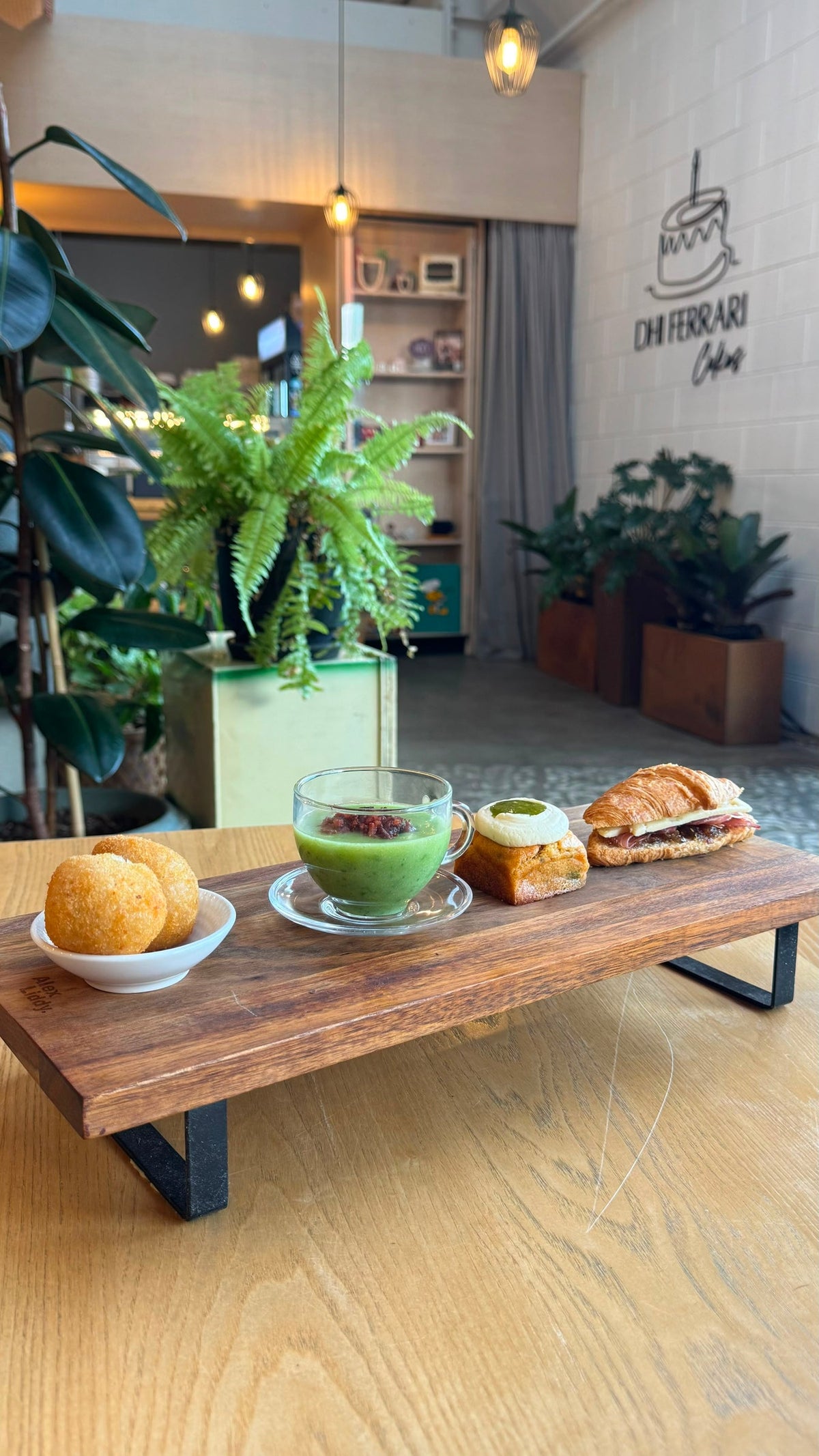
Collection is in person from The Welder, 20–26 Welles Street. We do not deliver or courier, because a cake handled by a stranger in a van arrives as a repair job. Open 10am to 6pm Tuesday to Friday and 10am to 3pm on Saturday, closed Sunday and Monday. Come on a Saturday morning, stand near the marble for a minute, and order after.