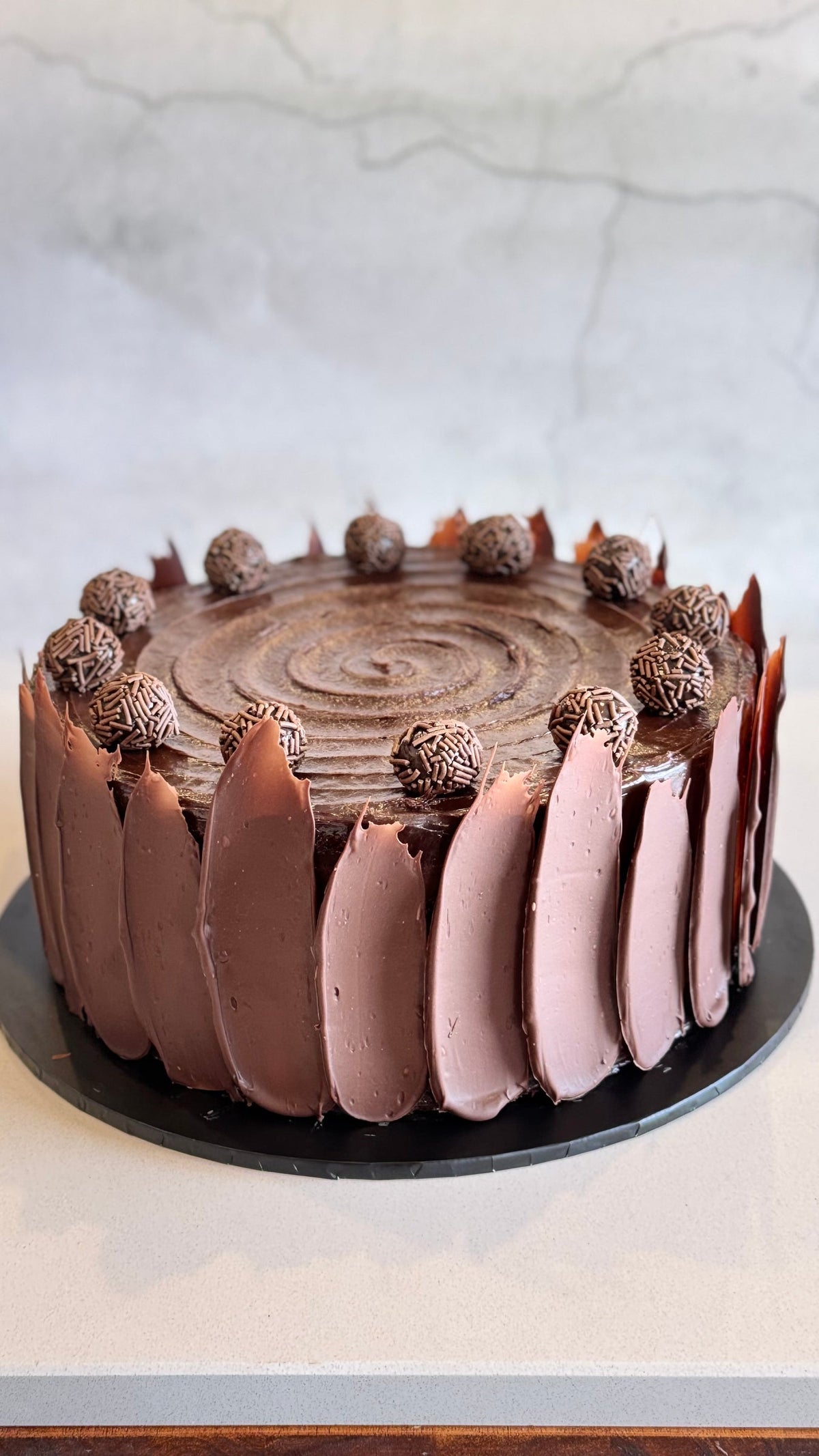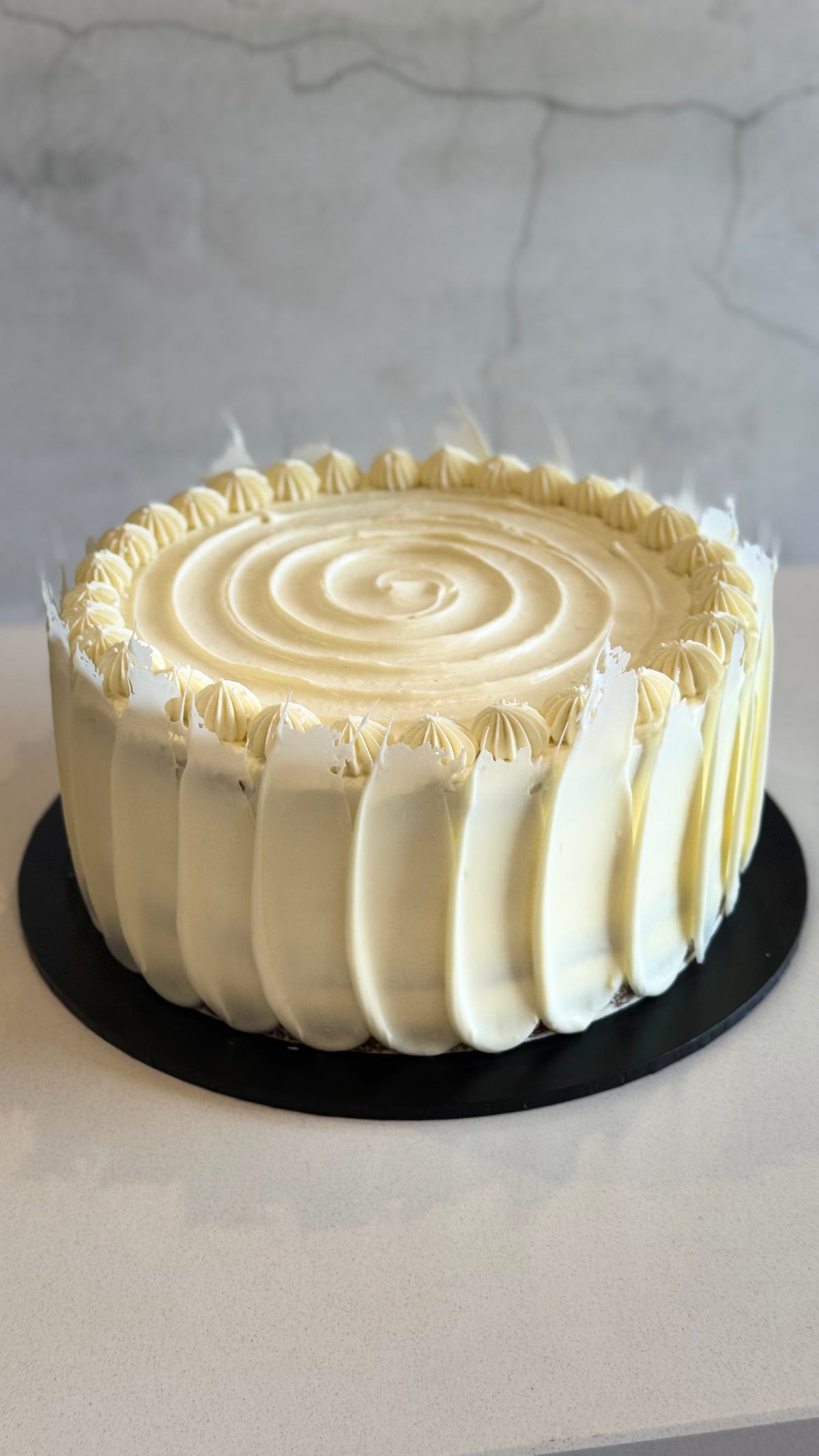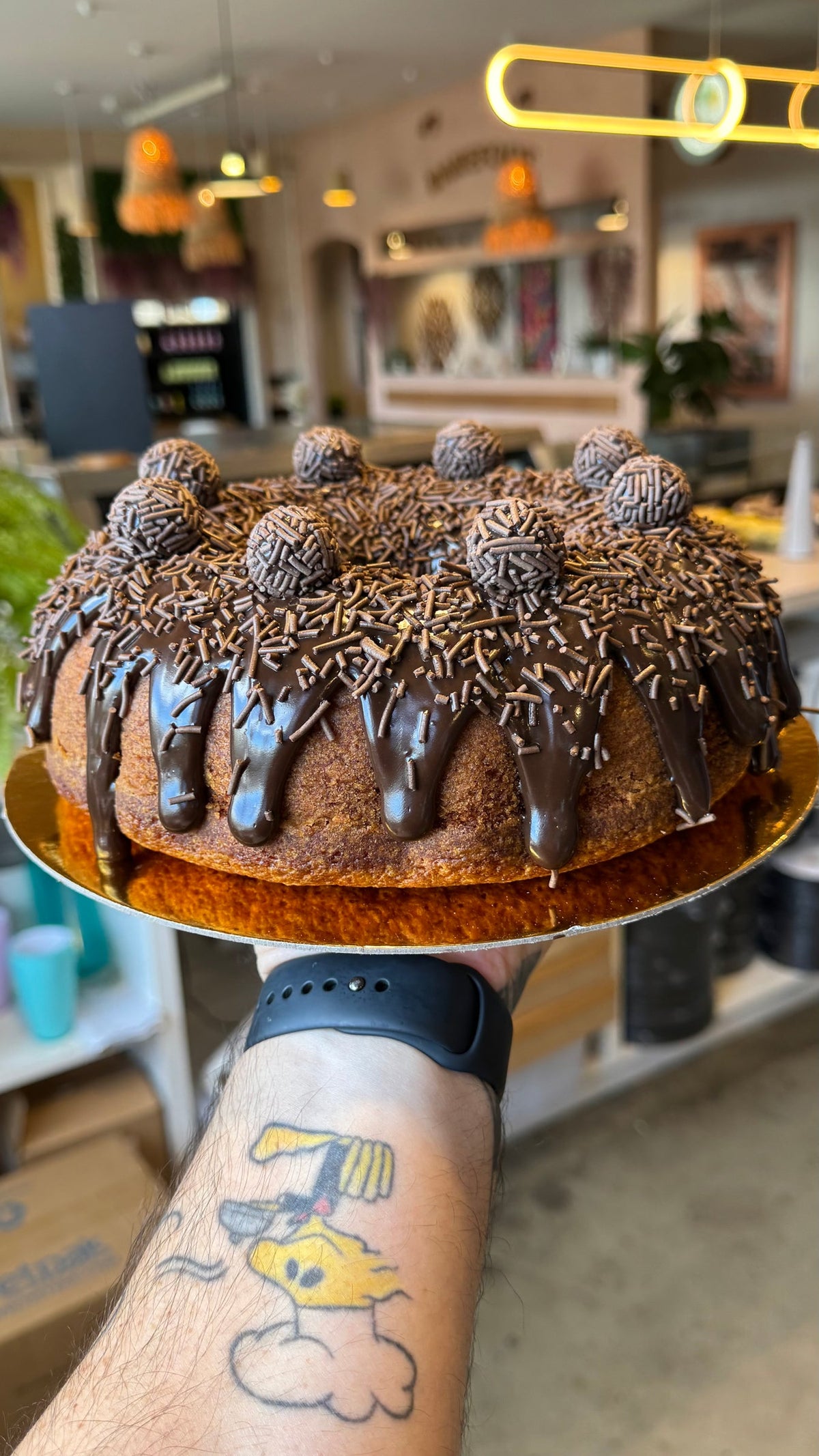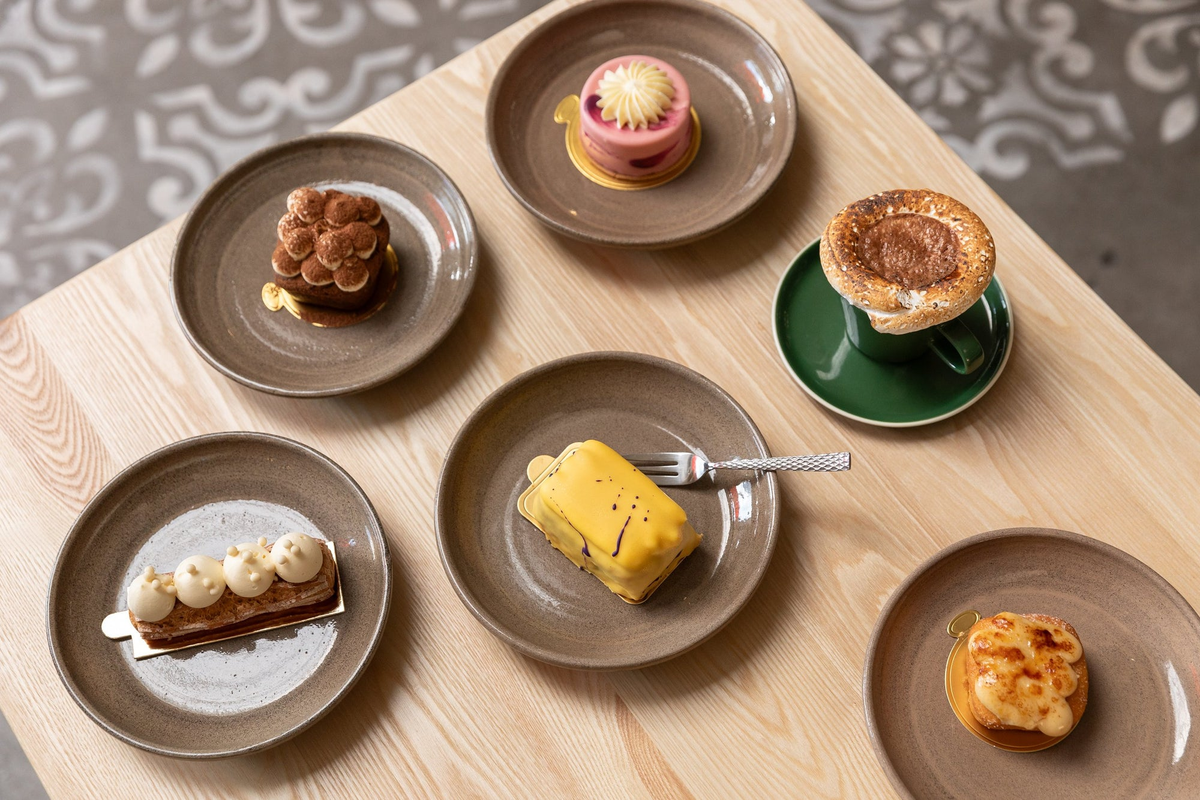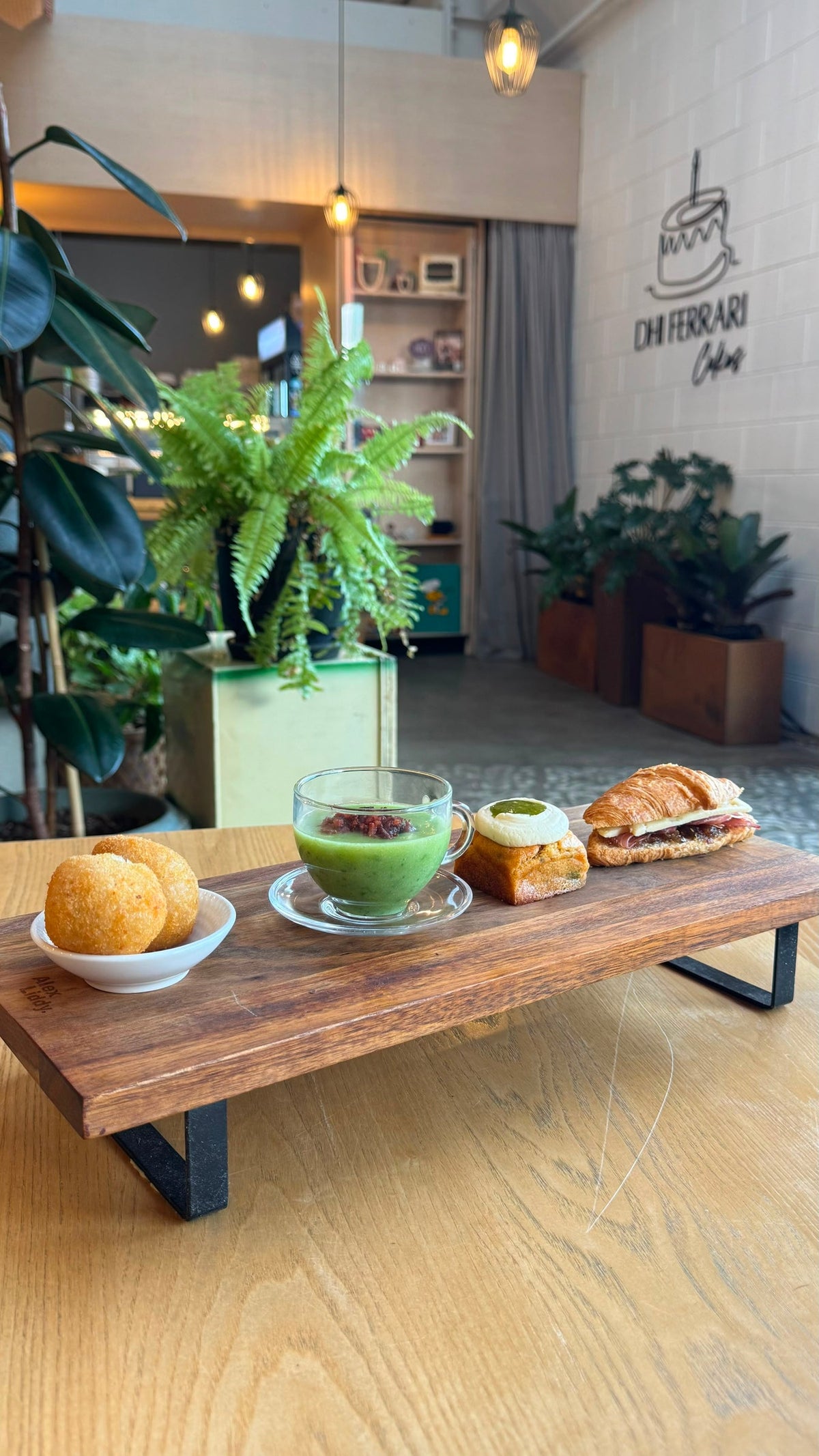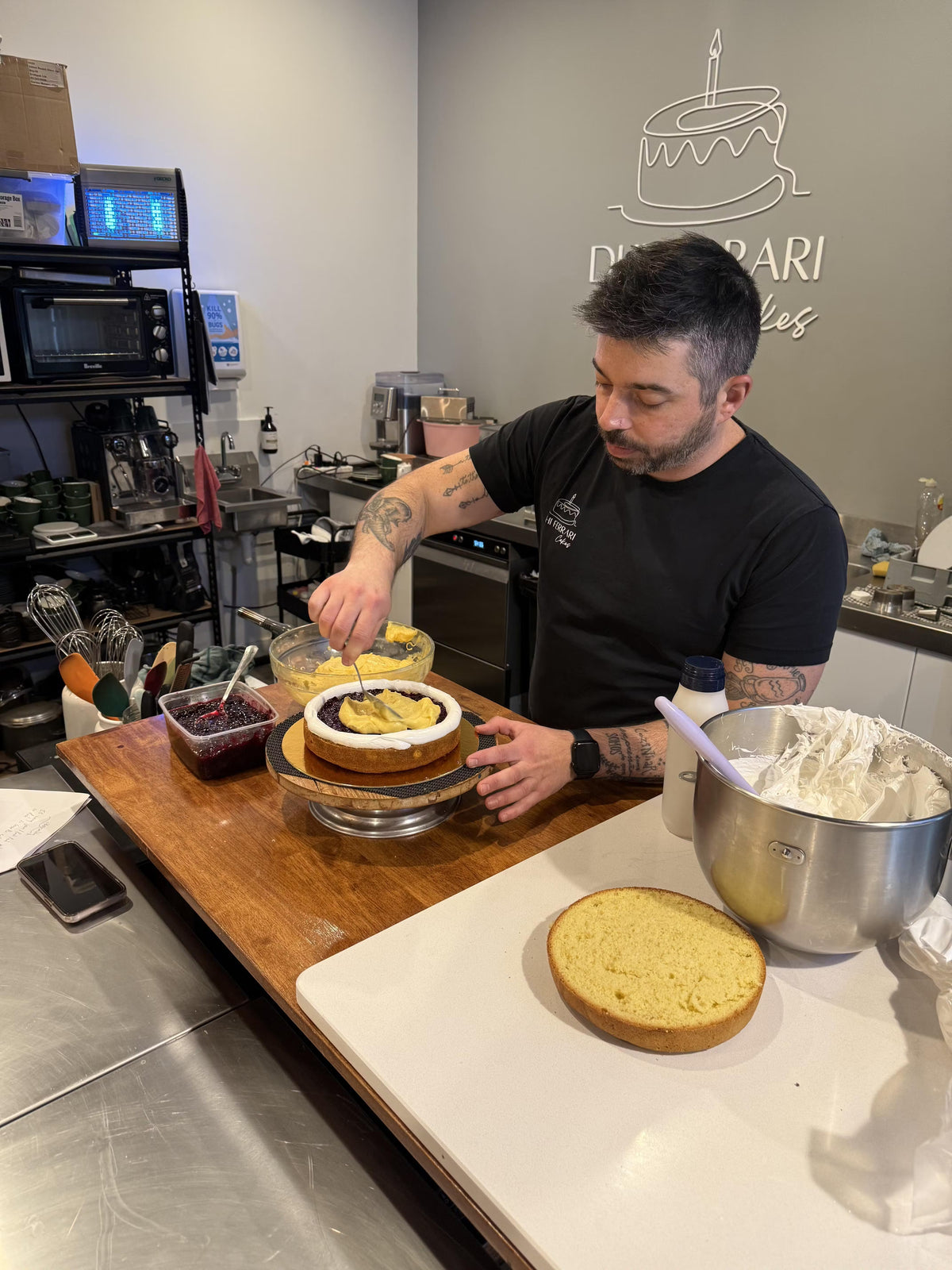
Ganache is two ingredients. Chocolate and hot cream, stirred until they stop being two things and turn glossy and thick. The whole recipe, and the finish on nearly every cake we make. What changes is the ratio, and what you do to it afterwards.
Learn ganache and you have learned most of a pastry kitchen. The same two ingredients behave like a glaze, a filling, a truffle or a mousse, depending on decisions made in the first ten minutes.
Why the ratio decides everything
More chocolate to cream sets firm. Firm enough to slice clean, pipe into a shell, roll between your palms. More cream gives you something pourable that settles into a smooth coat as it cools, still soft at room temperature, slow off a spoon. Neither is more correct. They answer different questions.
The dark chocolate ganache around the Prestige Coconut Cake has to hold a sharp edge on a 25cm cake without cracking when the knife goes in. The white chocolate ganache on the Lemonade Cake has a different job: stay silky against a tart lemon custard and never go stiff or waxy on the tongue.
Ganache montée, the version most people have not met
Ganache montée is whipped ganache, the same emulsion taken one step further. You make it, rest it cold overnight so the fat crystallises properly, then whip it. Air goes in. The colour lifts, the texture turns mousse-like, and it holds a piped shape while tasting far lighter than the ganache it started as.
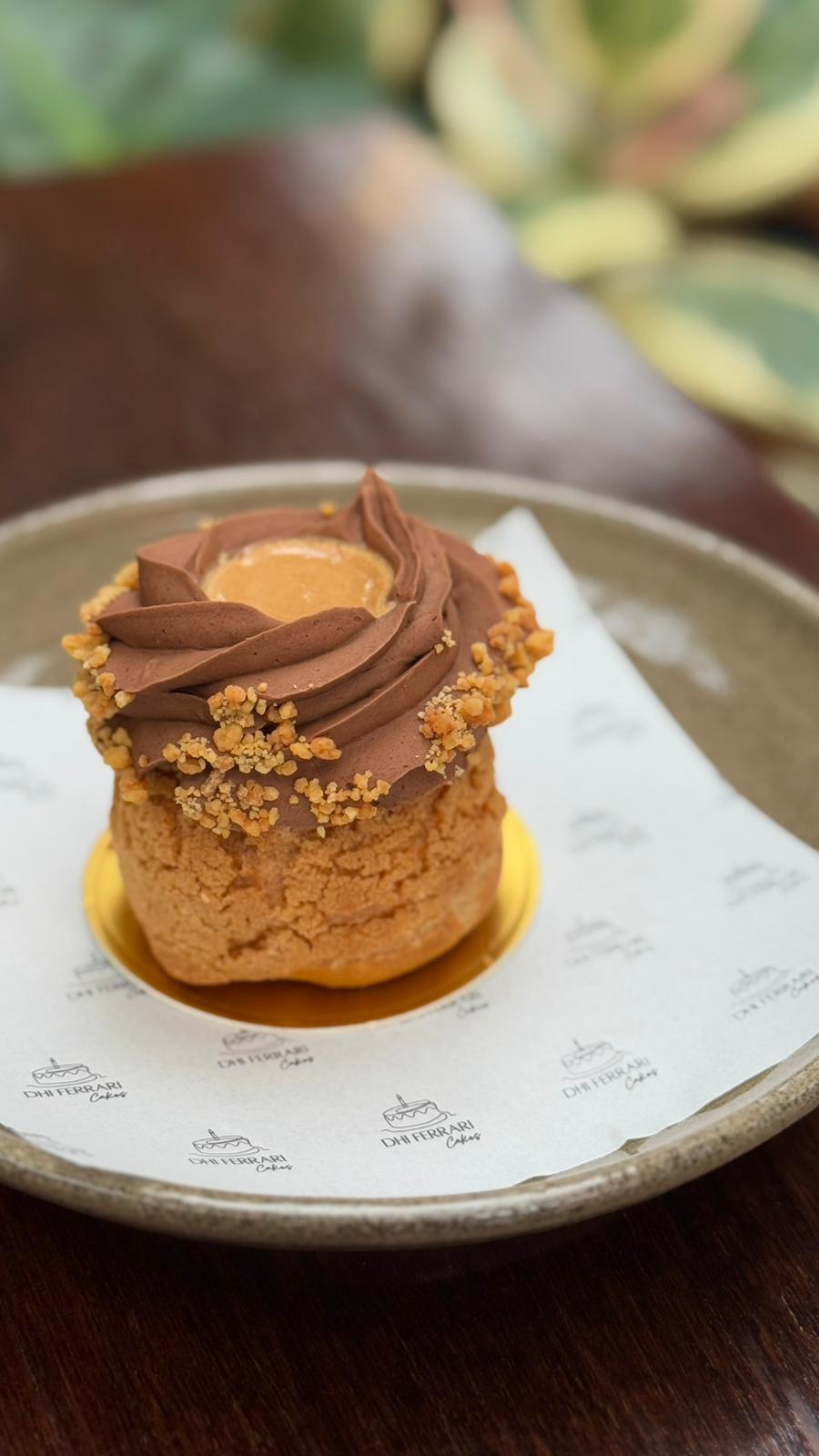
The clearest example in the cabinet is the Carolina choux. Choux pastry, pronounced "shoo", filled with dulce de leche mousse, layered with a dark chocolate ganache montée, then roasted white chocolate and a drizzle of salted caramel over the top. Eat it beside a firm-set ganache and the difference lands in a second. One coats the tongue and stays. The other collapses and is gone.
Where to taste each kind
- Dulce Caramel Cake: dark chocolate ganache over dulce de leche, bitter laid straight on top of milky.
- Snow White Chocolate Cake: white chocolate ganache with house-made white chocolate petals that snap under a fork.
- Jaffa Orange Chocolate Cake: dark ganache on an orange sponge, as a 20cm loaf or a 25cm bundt.
- Peanut Butter Cake: peanut butter ganache, thick and clinging. It contains peanuts, plainly stated.
- Chocolate Mini Cake and Sunrise Mini Cake: chocolate ganache, and a vanilla white chocolate ganache against berry jam.
- Nutella Mini Cake: Nutella white chocolate ganache on a ground hazelnut base made with no added gluten. Our kitchen is small and without exclusive production areas for all of our different recipes, so traces may occur, and nothing is guaranteed safe for severe coeliac disease.
Why ganache is the house finish
No fondant here, and no added colourings. Every cake in the layer cake range is finished in ganache and chocolate elements, and that is also why we work from existing designs and take no bespoke decoration briefs. A ganache finish has to taste of something. Fondant does not, and that is the honest reason it is popular. So you choose from what we already make well, from $95, with a 15cm serving 12 to 15, a 20cm serving 20 to 25, and a 25cm serving 30 to 35.
Learning it with someone else
Our public classes are capped at four people. Four is small enough that you watch Dhi's hands, not a screen: the bowl tipped, the cream going in, the moment the mixture splits and comes back together under the spatula. The list runs to a chocolate class with tempering, cake decorating across three levels, and choux and tart classes. Take two of the four seats and bring the person you actually bake with. You will spend the next month arguing about ratios, and that is the point. For something lighter, the mini-cake decorating challenge runs at $65 per person for groups of four to twelve, Tuesday to Friday between 11am and 4pm.
Before you come in
Cabinet items like the Carolina and the rest of the mini desserts need no notice. Walk in and choose. Anything made to order, layer cakes and trays from the mini cake range included, needs two days, and the checkout date picker only shows dates the kitchen can meet. Pickup only, from our patisserie inside The Welder on Welles Street. Open 10am to 9pm Tuesday to Saturday.