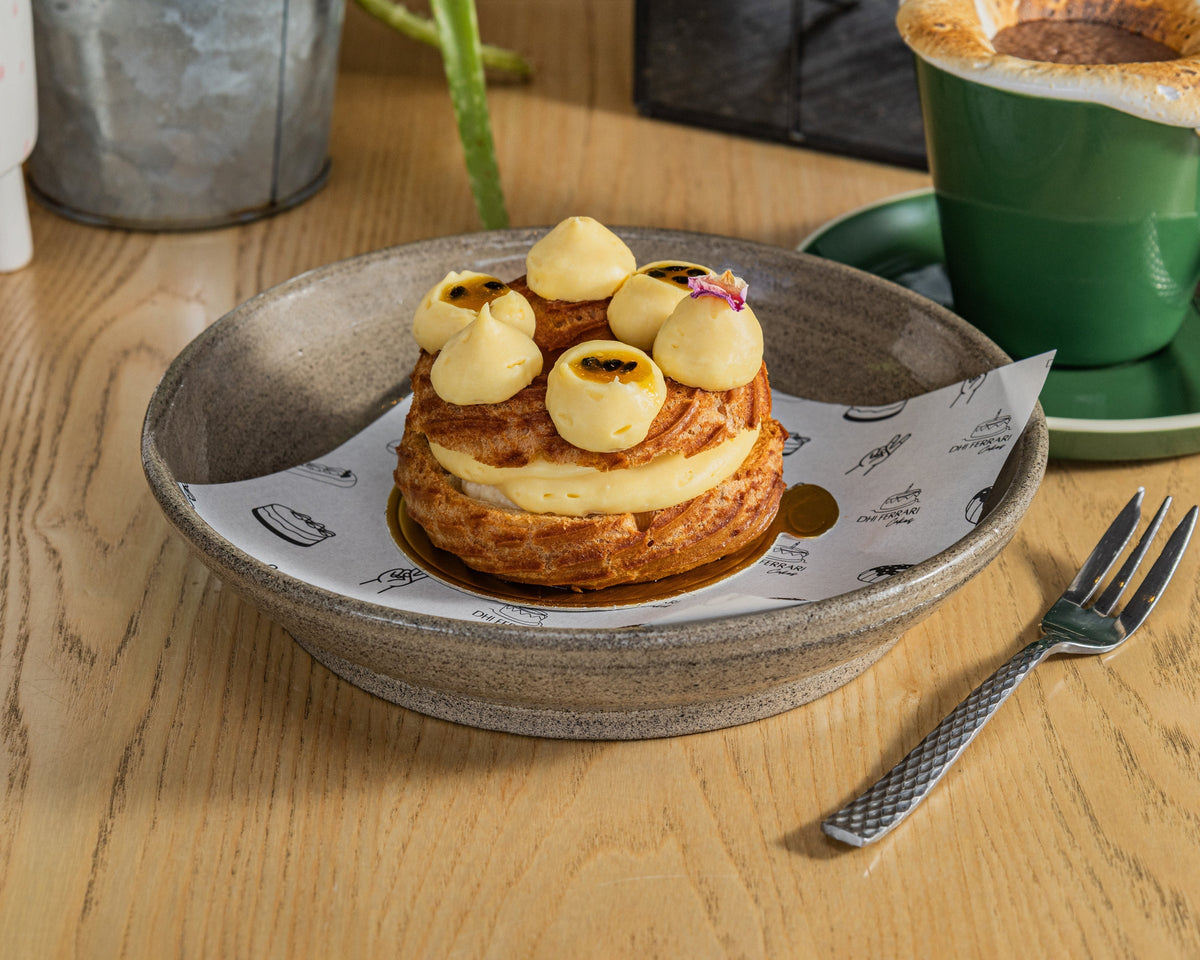
Shaped like a bicycle wheel, because it is one. A ring of choux pastry, split, filled and scattered with flaked almonds, sitting near the middle of the cabinet in any patisserie that takes itself seriously. The shape has not changed since 1910. A bike race is the reason for it.
A dessert invented for cyclists
The pastry chef Pierre Durand made the first one to commemorate the Paris–Brest–Paris, a race that ran 1,200 kilometres from the capital out to the Brittany coast and back again. The circle is the wheel. Riders and spectators ate them along the route for the calories, a use case very few desserts can honestly claim, and it explains the sheer generosity of the thing. Fuel first. Dessert second.
Why it goes wrong so often
All of it rests on pâte à choux, pronounced "shoo": water, butter, flour and eggs cooked on the stove before it ever meets an oven. No raising agent in it at all. It rises on steam alone, so the paste has to be dry enough to hold a piped ring and wet enough to puff, and the window between those two states is narrow. Open the oven early and the ring sighs and drops. Nothing brings it back. The whole method is written out in the dough that puffs on steam.
What ours does with it
Ours takes a tropical turn. The Paris–Brest is a ring of light choux, sliced and filled generously with roasted coconut cream. Roasting pulls a nuttier and more complex flavour out of the coconut than raw ever gives you. Then a layer of passionfruit whipped cream, so the tang cuts through the richness instead of sitting politely beside it. Take it at a table with a long black. The shell gives under the first press of the fork with a dry crackle, the cream has nothing left holding it in, and half of it comes out the sides. Order with something from the espresso bar and a quick stop turns into an afternoon.
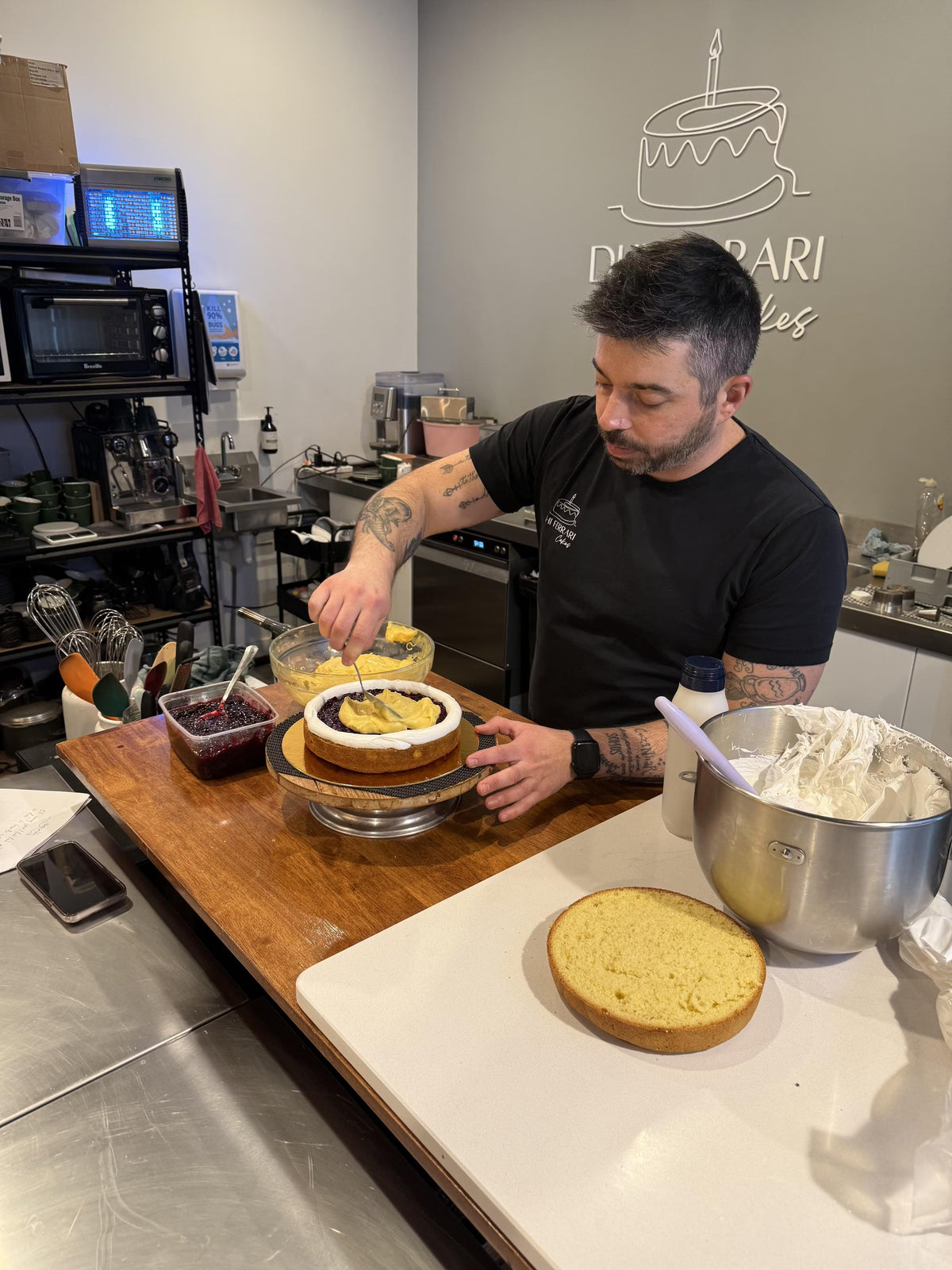
A coconut and passionfruit filling can go inside a 1910 Parisian pastry without reading as a gimmick because Dhi is from Rio de Janeiro and trained at French and Italian culinary schools. The two traditions have run alongside each other in his work across more than eighteen years in patisserie. French method, Brazilian flavour, neither one used as decoration. His story covers how that happened.
The rest of the choux family
Choux does not stop at one shape, and the others rotate through the mini desserts cabinet. The Carolina Choux carries dulce de leche mousse under a dark chocolate ganache montée, then roasted white chocolate and a drizzle of salted caramel. The seasonal Autumn Choux holds Biscoff whipped cream beneath a roasted white chocolate crumble and a leaf tuile. The Banoffee Profiterole is assembled at the counter while you wait: a choux shell, vanilla ice cream, bananas caramelised with orange and a splash of rum, then warm dulce de leche poured over so the ice cream starts to go immediately. Eat that one standing up.
They sit alongside the petit fours, a name that only ever meant "small oven" in French. How a mini cake becomes a petit four explains the step down in scale, and the trays themselves live in the mini cakes and petit fours range.
Learning to make one yourself
Choux is the single most useful thing to learn in French pastry, because so much of the repertoire is built on it. The one-day choux pastry class is $130 and runs at the bench beside Dhi, covering classic choux, craquelin, fillings and piping. You leave with a box of what you made and all the recipes. It caps at four people. Book two of the seats and half the room is someone you like, with twice as many pastries in the box on the way out. Dates are on the upcoming classes page.
Picking one up
Order through the menu and pick your day with the date picker at checkout, which only offers dates the kitchen can meet: two days for most things, three for larger desserts, seven for petit fours. Collection is in person from our patisserie inside The Welder at 20–26 Welles Street. We do not deliver or courier, because a filled choux ring does not survive being driven across town. Open 10am to 9pm Tuesday to Saturday, closed Sunday and Monday, so a Saturday morning is the plan.