A mirror glaze is judged by one test. Hold it at eye level and you should be able to read the reflection of the room in the top: not a shine, but a reflection with edges in it. It passes or fails in plain sight, and nothing can be tidied up afterwards.
What a mirror glaze actually is
A set liquid, poured. It holds its gloss as it firms, where an icing would dry matte, and it goes on in one pass over a dessert frozen solid first. The freezing matters more than people expect. A cold surface brings the glaze to a stop almost on contact, and the coat comes out even. Pour the same mixture over something at room temperature and it slides off in sheets, taking the surface with it.
The reflection comes from the cake underneath
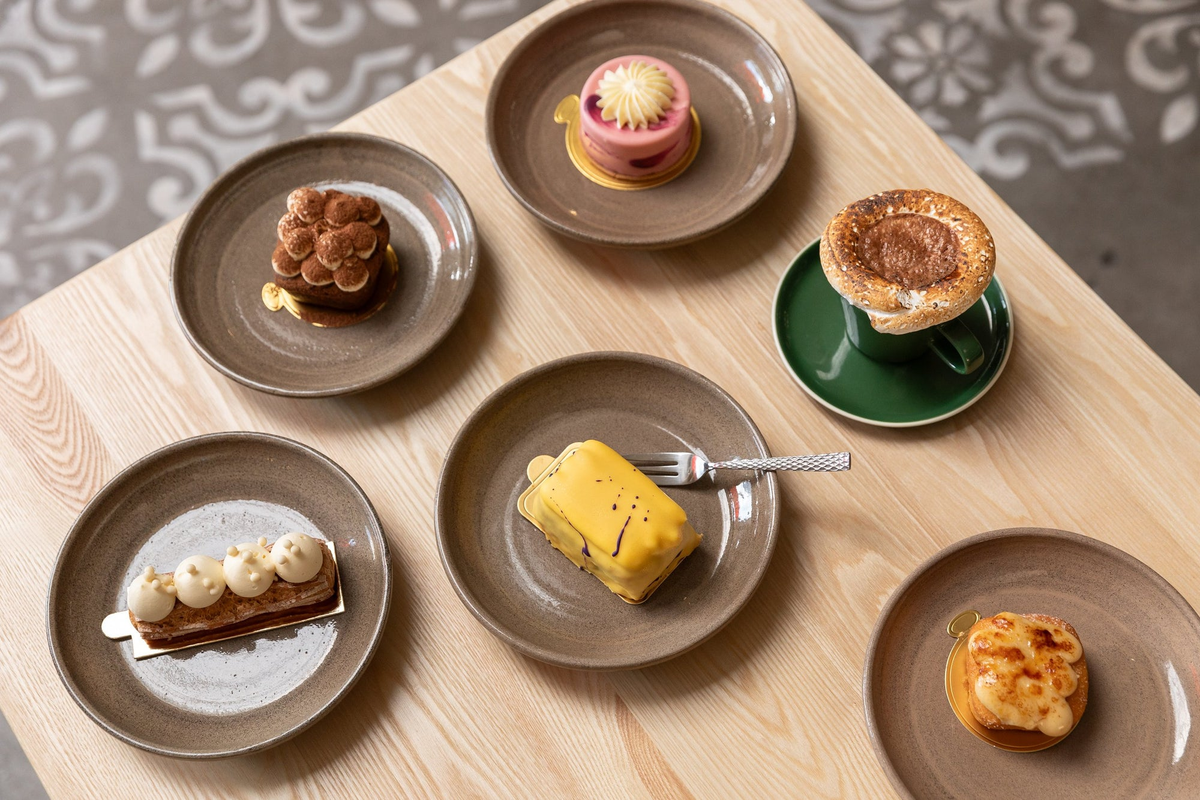
A glaze copies whatever it lands on. A dimple, a stray crumb, a thumbprint in the layer below: all of it still there at the end, magnified by the shine. So the finish belongs to mousse work, because that seamless face comes from a mousse set against the inside of a mould and turned out, never from smoothing something by hand. The same principle shows in our Black & White chocolate mousse cake, in the miniature version of it, and in the Romeo & Juliet cheesecake. The mini sets layers of double chocolate mousse on a dense, fudgy flourless brownie base. Surface first, finish second, in that order.
Temperature is the whole discipline
Too warm and a glaze runs thin, leaving a translucent film that shows every shade of the dessert beneath. Too cool and it thickens as it moves, setting in ridges that catch the light in stripes. The usable window is narrow, and reading the mixture is most of the skill. The pour itself takes seconds: one continuous movement, centre outwards, the excess falling away off the edge. A second pour over a half-set first one leaves a seam you can feel with a fingertip. Glazing has no second attempt built into it.
What we finish with instead
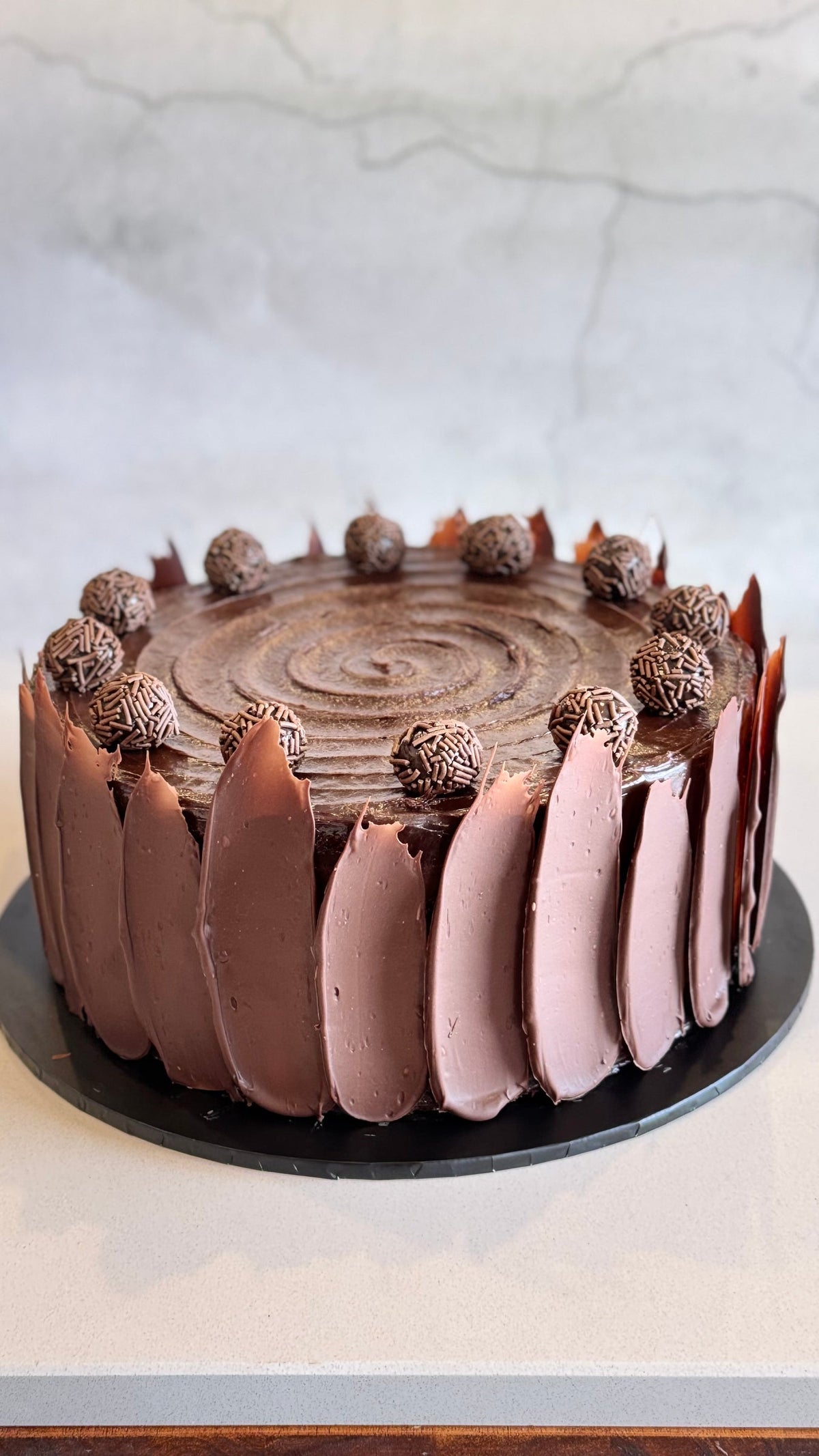
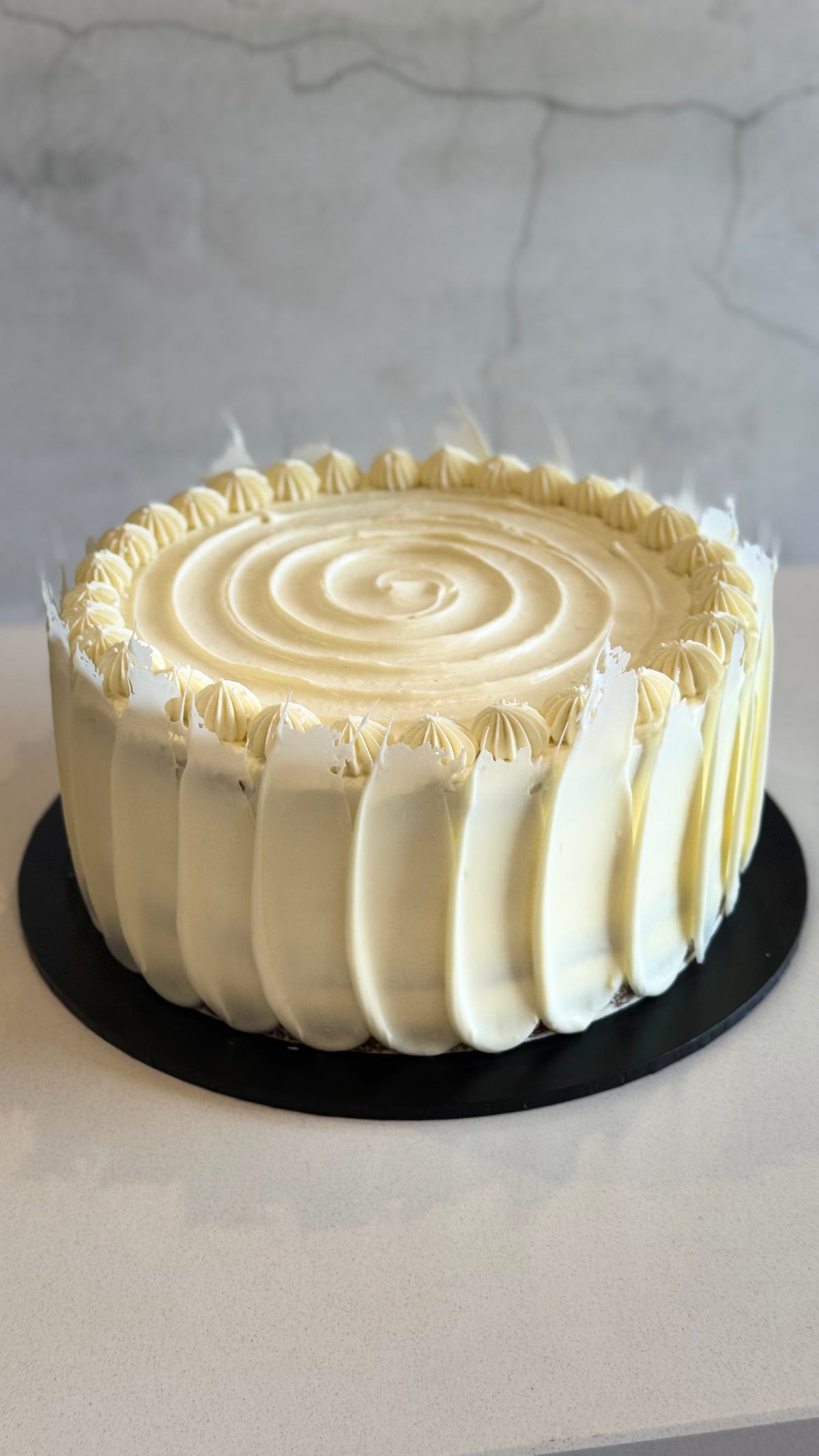
Ganache and chocolate elements. No fondant here, no colourings, no bespoke decoration; customers choose from the designs already on the menu. Within that limit there is range. The Carolina choux pairs a dulce de leche mousse with a dark chocolate ganache montée — whipped ganache, light in the way a mousse is light. Roasted white chocolate and salted caramel finish it. The Snow White Chocolate Cake, one of the ten layer cakes, wears white chocolate petals made by hand. Each one is thin enough to break against the teeth. Edges are where technique shows, so look along the mini desserts cabinet and you are looking at edges.
Try this. Sit down with one Ferrari Rocher and two spoons between you. The shell of dark chocolate and roasted almonds resists, then goes all at once, and a few almonds skid off onto the plate. Underneath it, the flourless chocolate and hazelnut cake is soft and close-textured. Snap first, then the soft centre. That order is the entire design of the thing.
Where to put your hands on the technique
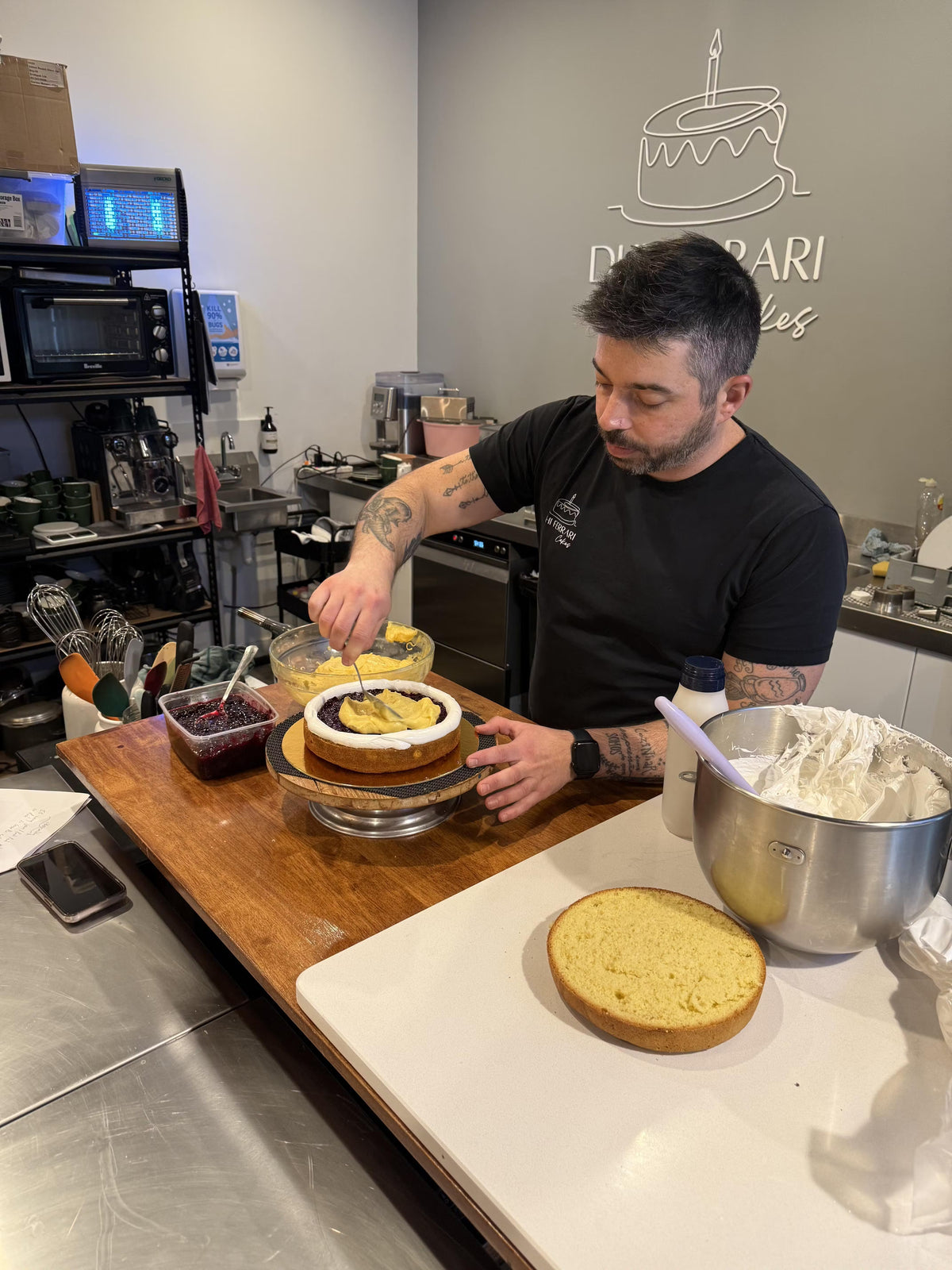
Reading about a glaze and pouring one are different skills. Our cake decorating and baking classes run from $130 to $180. Three decorating levels, a chocolate class covering tempering, and choux and tart classes. Dates go up under upcoming classes. Public classes are capped at four, so you work beside Dhi instead of watching from the back of a room. He trained in French and Italian schools, has more than eighteen years behind him and works without pre-mixes, so the reasoning behind every step gets explained as you go.
That cap of four is also the practical reason to bring someone. Book two seats and you have half the class, plus a second pair of hands to compare results with. Prefer to compete? The Mini-Cake Decorating Challenge takes four to twelve guests, up to ninety minutes, Tuesday to Friday between 11am and 4pm. It sits with our other group activities. We have also written about what happens inside a decorating class, why we work from set designs, and the road that brought Dhi from Rio to Welles Street.
How much notice the kitchen needs
Most things need two days, and the checkout date picker only offers dates the kitchen can meet. The larger mousse desserts need three: the Black & White chocolate mousse and the Romeo & Juliet cheesecake. Cabinet items and drinks need none. Everything is collected from our patisserie inside The Welder on Welles Street, and we do not deliver. Open 10am to 9pm Tuesday to Saturday. The frequently asked questions page covers storage and transport.